Sunrise And Morning Tours At Arches National Park: Beating The Crowds
Morning is when Arches is at its quietest, coolest and most photogenic, and a handful of guided tours leave Moab early enough to put you inside the park before the lots fill.
Short answer
Arches has no timed entry in 2026, but trailhead lots fill by 7:30 am in summer and entrance waits can exceed an hour from March to October. Three guided morning options include park entry and leave early: from $148 for guided hikes, $139 for a half day, and $159 for the panoramic van.
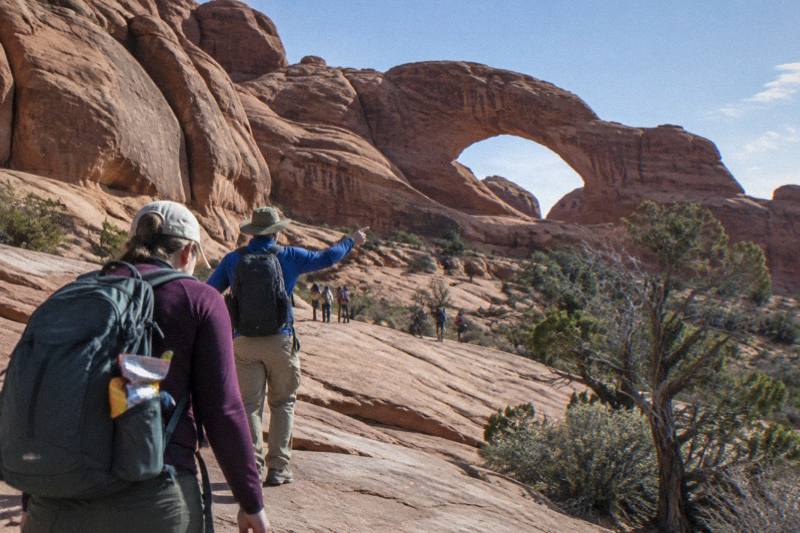
Morning is the window that works at Arches. The NPS hours page says it plainly: the park is very busy between March and October, and to avoid traffic the park recommends entering before 8 am or after 3 pm. In summer the traffic page goes further, noting that many trailhead parking lots fill by 7:30 am. That leaves a narrow, valuable stretch of early daylight when the sandstone glows, the air is still cool and the pullouts have space, and it is exactly the stretch that the morning guided-hikes tour from Moab Adventure Center is built around, a 4-hour trip from $148 per person that includes the park entrance fee and pickup if you select that option.
Why Is Early Morning The Best Window At Arches?
Early morning wins on three fronts at once: the NPS says entrance waits between March and October may exceed 60 minutes, many trailhead lots fill by 7:30 am in summer, and summer highs average 93 F in June and 100 F in July. Arriving before 8 am trades all three problems for cool air, empty pullouts and low light on the rock.
The congestion mechanics matter more than most first-time visitors expect. The NPS traffic page describes what happens when demand outruns supply: when parking areas reach capacity, staff may temporarily restrict access to specific locations, and those restricted periods can last three to five hours. A late morning arrival can therefore mean not just a queue at the gate but a closed parking lot at the very arch you came for. Morning visitors largely sidestep that whole cascade.
Then there is the heat. The NPS weather almanac shows average highs of 93 F in June, 100 F in July and 97 F in August, with six, sixteen and twelve days above 100 F in those months respectively. Rangers respond to hundreds of search and rescue incidents a year, many involving heat and sun. A 7 am trailhead start finishes before the rock has even warmed up; the same hike at 11 am is a different proposition entirely.
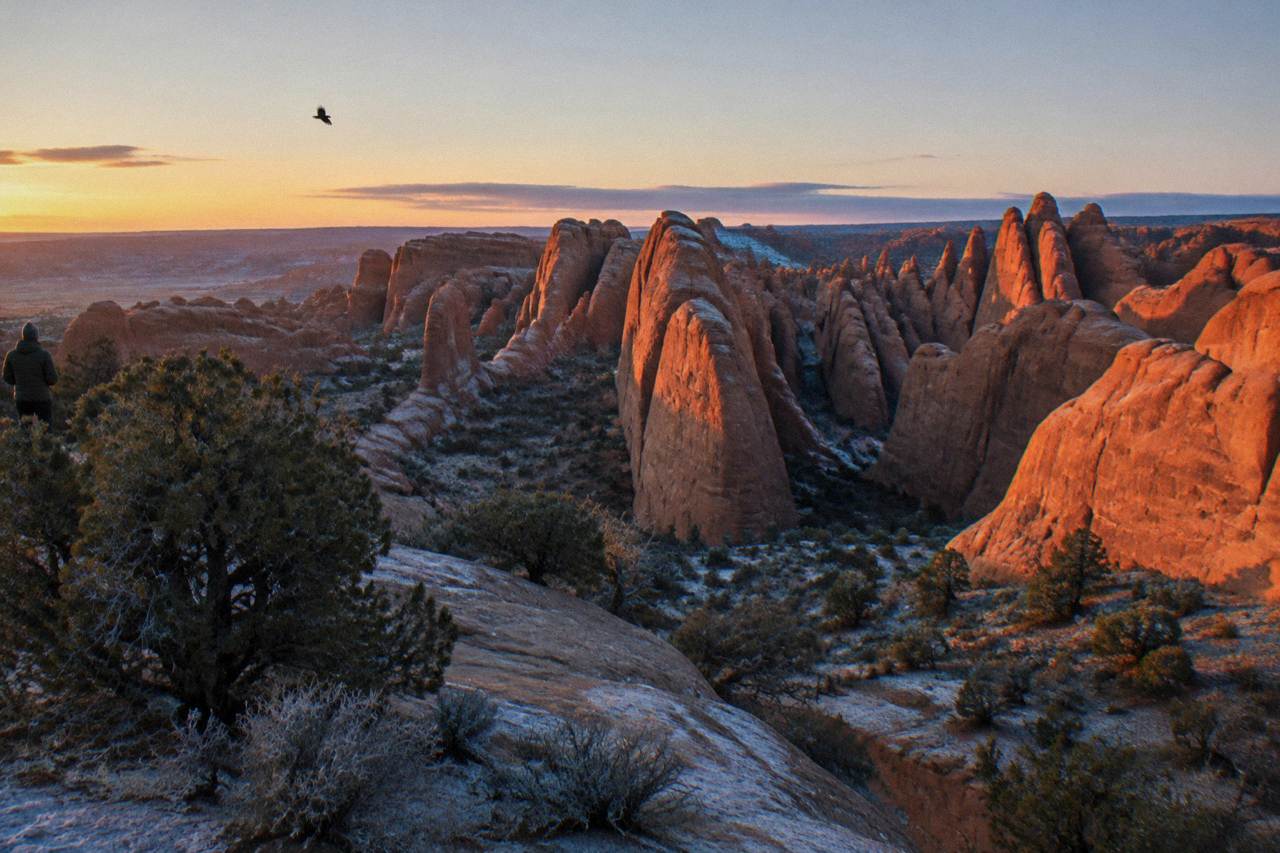
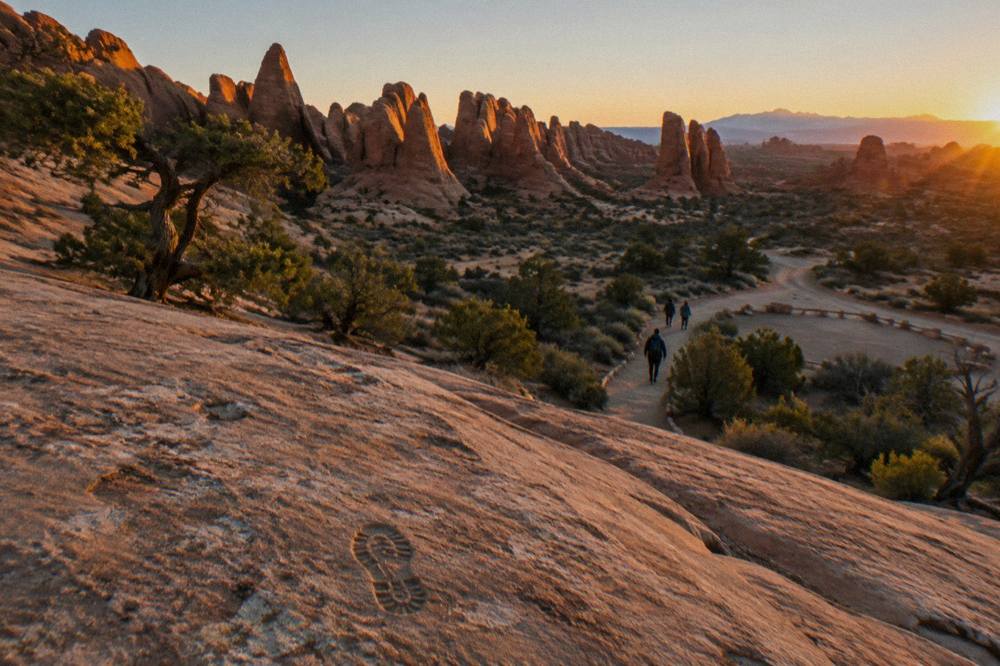
The light is the third reason, and for many readers the decisive one. Low sun rakes across the fins and towers, and the red sandstone reads warmer and deeper than it does under midday glare. Photographers plan whole trips around it. If light is your main interest, the photography tour guide covers where the morning angles work best.
Here is how the three pressures stack up across a typical peak-season day:
| Time of day | Entrance conditions | Parking and lots | Temperature and light |
|---|---|---|---|
| Before 8 am | Shortest waits of the day | Most lots still open | Coolest hours, low warm light |
| 8 am to 11 am | Building toward peak | Popular lots filling or full | Warming fast, light flattening |
| 11 am to 3 pm | Waits may exceed 60 minutes | Restrictions possible, 3 to 5 hours | Midday heat, harshest light |
| After 3 pm | Easing through late afternoon | Spaces reopen as day visitors leave | Cooling, light improving again |
The honest summary: mornings beat afternoons for crowds and heat, and only the very start of morning gives you the good light too. That is a lot of constraints to juggle alone, which is a fair argument for a guided early departure.
What Is The Best Time Of The Day To Go To Arches National Park?
The park's own answer, stated on its hours page, is before 8 am or after 3 pm. Those two shoulders avoid the heaviest entrance traffic and the worst heat. Within them, the early window is the stronger pick for most visitors: it combines short lines, open parking, cool air and photogenic light, while the late window trades light quality for a shorter remaining day.
The recommendation is not a formality. Arches receives about 1.5 million visits a year, and nearly all of them funnel through a single entrance road off US 191, five miles north of Moab. There is no second gate, no public transportation inside the park, and only so much pavement at Delicate Arch, the Windows and Devils Garden. Demand concentrated on one road with finite parking produces exactly the outcome the NPS describes on its hours page: enter before 8 am or after 3 pm to avoid traffic.
A second, quieter fact tilts the balance toward morning. The park is normally open 24 hours a day, so an early start costs nothing in access, and the reward compounds: you are already inside and parked when the first wave arrives, and you can be finishing lunch as the entrance line peaks. A late-afternoon arrival gives you perhaps two or three good hours before the light goes. The month-by-month planning guide covers how these windows shift with the seasons.
For readers weighing the morning against the sunset side, the trade-offs are real and the sunrise versus sunset comparison works through them in detail. The short version: sunrise crowds are smaller, sunset crowds at Delicate Arch can number in the hundreds, and in July a 100 F afternoon makes the morning choice for you.
| Plan | Arrive by | What you gain | What it costs |
|---|---|---|---|
| True sunrise | 45 to 60 min before sunrise | Best light, emptiest park | Earliest alarm, cold start in winter |
| Early morning | 7 to 7:30 am | Open lots, cool air | Light already climbing |
| Mid morning | 8:30 to 10 am | Comfortable start | Full lots at popular stops in peak season |
| Late afternoon | After 3 pm | Shorter entrance line | Less time, high heat in summer |
Which Morning Tour Should You Book From Moab?
Three listings cover the morning market well. The Moab Adventure Center morning tour with guided hikes runs 4 hours from $148 with park entry included. The Mild to Wild half day, 4 hours from $139, also includes entry and adds a junior ranger program for kids under 12. The Moab Tourism Center panoramic van, 4 hours from $159, includes entry, snacks and drinks, rated 5.0 across 879 reviews.
All three are morning-departure products from Moab operators, but they are different listings with different shapes, not three versions of one tour.
The Moab Adventure Center morning tour (4 hours, from $148 per person, rated 4.9 across 78 reviews) is the hiking-flavored option: guided short hikes plus the park drive, snacks and water, park entrance fee in the includes list, and pickup available if you select that option when booking. It meets at 225 S Main St in Moab, and the group size is not stated on the listing. This is the listing to ask for when the words "I want to actually get out and walk, not just look" describe your morning.
The Mild to Wild half day (4 hours, from $139 per person, rated 4.8 across 117 reviews) is the cheapest guided morning among the tours listed here. Park entry is included, cold drinks are included, and the listing adds a junior ranger program for kids under 12, which makes it the family pick. It meets at the Mild to Wild office on Kane Creek Blvd, with a shuttle from and back to that meeting point. Snacks and lunch are not included.
The Moab Tourism Center panoramic van tour (4 hours, from $159 per person, rated 5.0 across 879 reviews) is the sightseeing pick: a 14-person-max van, guide, snacks, drinks and the park entrance fee all included, meeting at 606 S Main St in Moab. Its review pool is the largest of the three by a wide margin, and its itinerary includes the Windows section and Balanced Rock alongside the drive. For travelers who want the morning window without any walking at all, the easy-access tours guide looks at this style of trip in more depth.
One planning note that keeps tripping people up: park entry is not included on every tour in town. On these three it is, in writing, in the includes lists. On most other Moab listings, including the 4x4 backcountry trips and the sunset tours, entry is separate and you bring a pass or pay at the booth. The entrance fee guide breaks down exactly which listings cover the $30 vehicle fee and which do not.
| Tour | Length | Price | Rating and reviews | Group max | Park entry |
|---|---|---|---|---|---|
| Morning tour with guided hikes | 4 hours | from $148 per person | 4.9 across 78 reviews | Not stated on the listing | Included |
| Half-day tour with park entry | 4 hours | from $139 per person | 4.8 across 117 reviews | 14 | Included |
| Panoramic van tour | 4 hours | from $159 per person | 5.0 across 879 reviews | 14 | Included |
| Sunset tour with guided walks | 4 hours | from $142 per person | 4.8 across 141 reviews | Not stated on the listing | Bring a pass |
Sunrise Alone Or A Guided Morning Tour: Which Fits You?
Going solo for sunrise costs only the $30 vehicle pass and buys total freedom over stops and timing, but you handle the driving, the parking lottery and the interpretation yourself. A guided morning tour from $139 to $159 adds a licensed guide, entry in the price on the three listings above, and a vehicle that arrives early by design, at the cost of a fixed itinerary and a group.
The self-drive case is strong and nobody should talk you out of it lightly. The park is open 24 hours, there is no timed entry in 2026 per the NPS news release of February 18, 2026, and a private vehicle pass is $30, valid for the standard seven days the NPS fees page describes. Arrive before the lots fill and the morning is yours. The self-guided audio tour guide covers the middle path, an audio guide app from $15.99 to $24.99 per vehicle that narrates the drive as you go.
The guided case rests on three things. First, timing: operators run this route daily and their departures are built around the morning window, not around a vacation alarm clock that got snoozed. Second, knowledge: a licensed guide names the formations, the geology and the history, and the NPS requires commercial operators to hold a Commercial Use Authorization for exactly this kind of interpretive work. Third, friction: with entry included on all three morning listings, you are not standing at a booth or fumbling with a pass at 6:40 am.
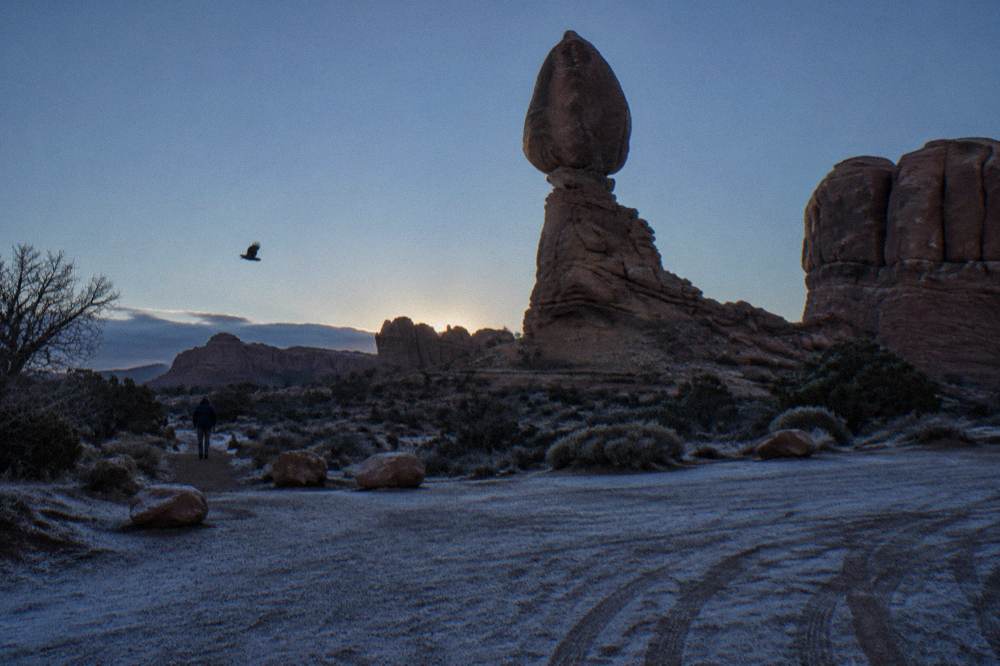
Families and mobility-conscious travelers lean guided for a fourth reason: the walking is structured. The guided-hikes morning pairs the drive with short interpreted walks rather than leaving you to guess which trail suits a mixed group. Readers deciding between the two extremes may also find the broader best way to see the park comparison useful.
| Factor | Sunrise on your own | Guided morning tour |
|---|---|---|
| Cost beyond entry | $30 vehicle pass, covers all occupants | From $139 to $159 per person, entry included |
| Timing control | Entirely yours | Fixed departure, built for the early window |
| Parking risk | Yours to manage | Driver's problem |
| Interpretation | None unless you add audio | Licensed guide throughout |
| Pace | Stop anywhere, anytime | Set itinerary with the group |
How Early Should You Actually Arrive For Sunrise?
Plan to pass the entrance station 45 to 60 minutes before official sunrise. That sounds excessive, but sunrise times shift across the year, the drive from downtown Moab takes about 15 minutes, and the payoff lots at Delicate Arch and the Windows can fill before the sun clears the horizon in peak season. The NPS advises entering before 8 am as its general rule.
Sunrise is a moving target, and the times below are computed approximations for the Moab area, accurate to within about five minutes. Treat them as planning anchors, not gospel, and check a current almanac for your exact date. What does not move is the logic: you want to be standing at your viewpoint, not parked on the entrance road, when the light arrives.
| Date (approx.) | Local sunrise | Suggested entrance time |
|---|---|---|
| January 15 | About 7:30 am | By 6:45 am |
| March 15 | About 7:15 am | By 6:30 am |
| June 15 | About 5:55 am | By 5:10 am |
| September 15 | About 6:55 am | By 6:10 am |
| November 15 | About 6:55 am | By 6:10 am |
A June sunrise means a 5 am alarm and a dark drive up US 191, which is exactly why some travelers hand the logistics to a guided departure instead. A winter sunrise is a gentler 7:30 am, though the NPS winter guidance notes that even small amounts of snow or ice can make trails and roads impassable, so check conditions before committing to a pre-dawn drive.
One more morning-only consideration: all-terrain wheelchairs are now available for select trails, recommended for Landscape Arch, Double Arch, Skyline Arch and the Lower Delicate Arch Viewpoint, per an NPS announcement. The lower viewpoint is a level 100-yard walk, which makes it one of the more accessible sunrise targets in the park.
What Should You Bring On A Morning Tour?
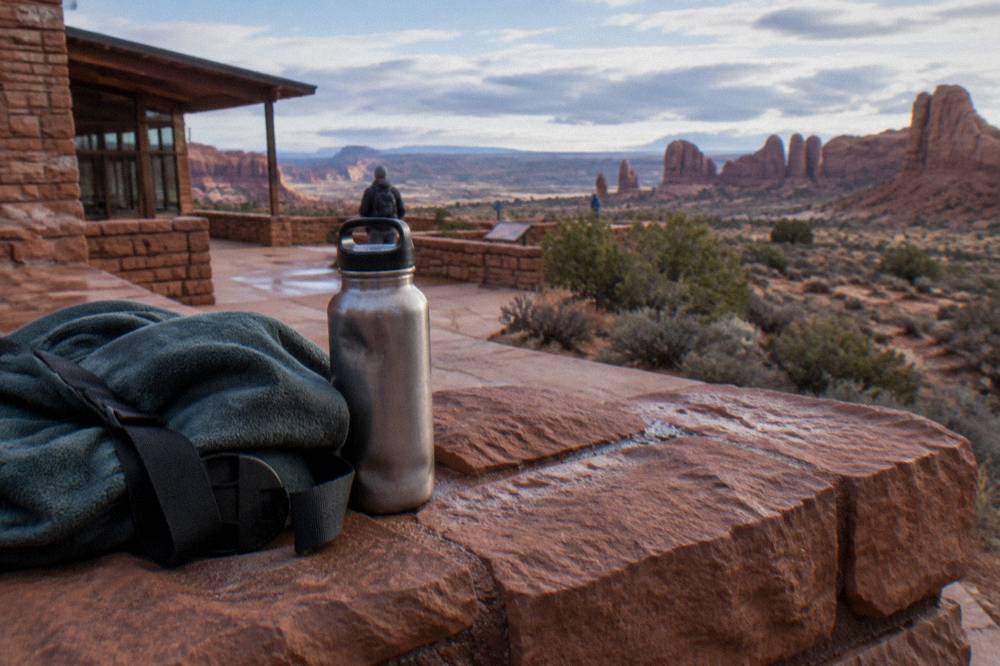
Bring more water and more layers than the forecast suggests. Desert mornings can start near freezing even in spring and fall, daily swings exceed 40 degrees, and the NPS asks every Fiery Furnace visitor to carry at least a quart of water per person, a standard that reflects how fast the high desert dries you out. Sun protection matters from the first hour of daylight.
The layering math surprises people. In April the average spread is 71 F days over 42 F nights; in October, 74 over 42. A sunrise viewpoint in shorts weather can be genuinely cold, and the same hiker will want that jacket tied around their waist by 10 am. The NPS weather page is the source for these averages, and its safety guidance on heat and flash floods is worth a read before any summer morning.
| Month | Average high / low (F) | Days above 100 F | Morning packing note |
|---|---|---|---|
| March | 64 / 35 | 0 | Warm layer essential, wind possible |
| April | 71 / 42 | 0 | Layers, sun hat |
| May | 82 / 51 | 1 | Light jacket for the start only |
| June | 93 / 60 | 6 | Water, sun protection from sunrise |
| July | 100 / 67 | 16 | Maximum water, start as early as possible |
| August | 97 / 66 | 12 | Water, monsoon storm awareness |
| September | 88 / 55 | 1 | Layers return, excellent window |
| October | 74 / 42 | 0 | Warm layer, latest comfortable sunrise |
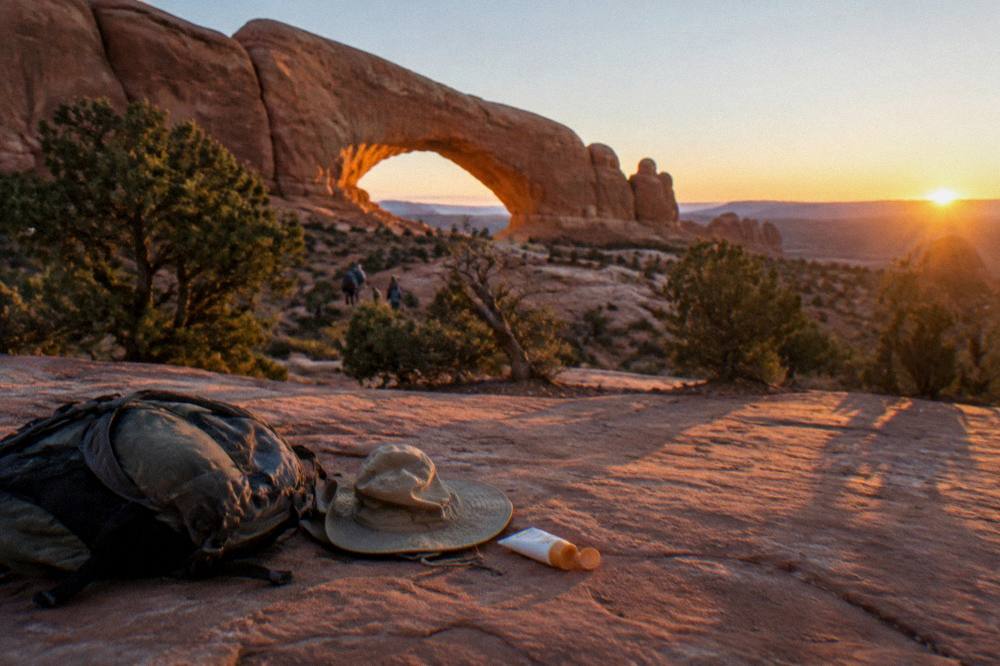
On the guided side, the tours here soften the packing list a little: the three morning tours include water or drinks and most include snacks. What no tour supplies is sunscreen, a hat or the right shoes, and those three items do more morning work than any gadget. Pets are worth a flag here too: they are not allowed on any trail at Arches, so a sunrise visit with a dog is limited to roads, parking areas and picnic spots, leashed.
Which Stops Are Worth The Early Start?
Delicate Arch and the Windows section repay an early arrival most, because both combine fragile parking with dramatic morning light. Balanced Rock and Park Avenue are low-effort early stops that most morning routes pass anyway. The lower Delicate Arch viewpoint, a level 100-yard walk, delivers a one-mile-distant view for anyone not taking the 3-mile trail.
The Delicate Arch math is worth knowing before you choose a tour or a route. The trail is 3 miles round trip and climbs 480 feet, passing the Wolfe Ranch cabin and a Ute petroglyph wall. The arch itself is the largest free-standing arch in the park, its opening 46 feet high and 32 feet wide. The NPS notes that sunset crowds at the arch can number in the hundreds; sunrise is the mirror image, thin and quiet. If the trailhead lot is full, walking from the viewpoint lot turns the trip into 5 miles round trip, which is a real cost at the start of a hot day. To weigh that quiet morning against the arch's famous evening glow, our comparison of sunrise versus sunset at Arches National Park walks through how the light, the heat, and the crowds stack up.
The stop-by-stop question of which tour actually visits which formation is answered listing by listing on each booking page. The panoramic van itinerary includes the Windows and Balanced Rock; the sunset guided-walks listing includes the Delicate Arch Overlook. When in doubt, the itinerary section of the live listing is the source of truth.
For a fuller rundown of the marquee formations and how tours string them together, the Windows, Balanced Rock and Devils Garden guide maps the standard route, and the what not to miss roundup is a good cross-check if you are building your own sunrise drive. One gentle rule from the NPS applies everywhere: no climbing or walking on any arch.
| Stop | Effort | Morning payoff | Catch |
|---|---|---|---|
| Delicate Arch trail | 3 miles round trip, 480 ft climb | Quiet arch, rising light on the opening | Trailhead lot fills early |
| Lower Delicate Arch viewpoint | Level 100-yard walk | Distant arch view, almost no effort | Arch seen from about one mile away |
| Windows section | Short walks from the lot | Warm light through the openings | Lot is small, fills fast |
| Balanced Rock | Immediate roadside | Quick win on any route | Brief stop only |
| Park Avenue overlook | Minutes from the entrance | First light down the avenue | Shade lingers early |
Common Questions About Morning Visits To Arches
What Is The Best Time Of The Day To Go To Arches National Park?
The NPS recommends entering before 8 am or after 3 pm. Of the two, the morning window is stronger for most visitors: entrance waits are shortest, trailhead lots are still open, temperatures are coolest and the low light on the sandstone is at its best.
Do I Need A Timed-Entry Reservation For A Morning Visit In 2026?
No. Arches will not require advance timed-entry reservations in 2026, per the NPS news release of February 18, 2026. A valid entrance pass is still required, and reservations remain necessary only for Devils Garden Campground and Fiery Furnace hikes.
Which Morning Tours Include The Park Entrance Fee?
Three listings include it in writing: the Moab Adventure Center morning tour with guided hikes from $148, the Mild to Wild half day from $139, and the Moab Tourism Center panoramic van from $159, all per person. Most other Moab tours list entry separately, so bring a pass or budget for the $30 vehicle fee.
How Early Do Parking Lots Fill At Arches?
The NPS traffic page says many trailhead lots fill by 7:30 am during summer peak visitation, and when lots reach capacity, staff may restrict access to specific locations for periods of three to five hours. Arriving before 8 am largely avoids both problems.
Is Sunrise Or Sunset Better At Arches?
Sunrise generally offers smaller crowds and cooler hiking, while sunset delivers the famous glow on Delicate Arch, sometimes before hundreds of onlookers. In summer, with July averaging 100 F, the morning is the safer and more comfortable choice. The sunrise versus sunset comparison on this site works through the trade-offs.
Can I Do Delicate Arch At Sunrise On My Own?
Yes. The park is open 24 hours and there is no timed entry in 2026. The trail is 3 miles round trip with 480 feet of climbing; carry water and a headlamp for the dark start, and check conditions in winter, when the NPS warns snow or ice can make trails impassable.
The pattern across all of this is simple: the morning is the park's best hours, and the only real question is whether you claim them alone or on a guided departure. Arches National Park Tours lines up all the early tours side by side, and every price above is printed as a "from" figure, with the live price on each booking page.