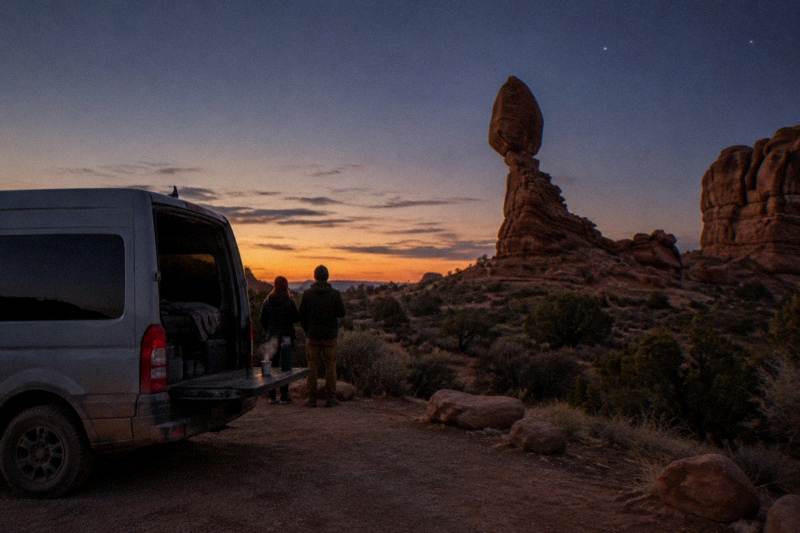
Is Sunrise Or Sunset Better At Arches National Park?
Sunrise brings cooler trails and empty overlooks, sunset brings the famous red glow on Delicate Arch. Here is how light, heat and crowds stack up, and which tour slot fits each.
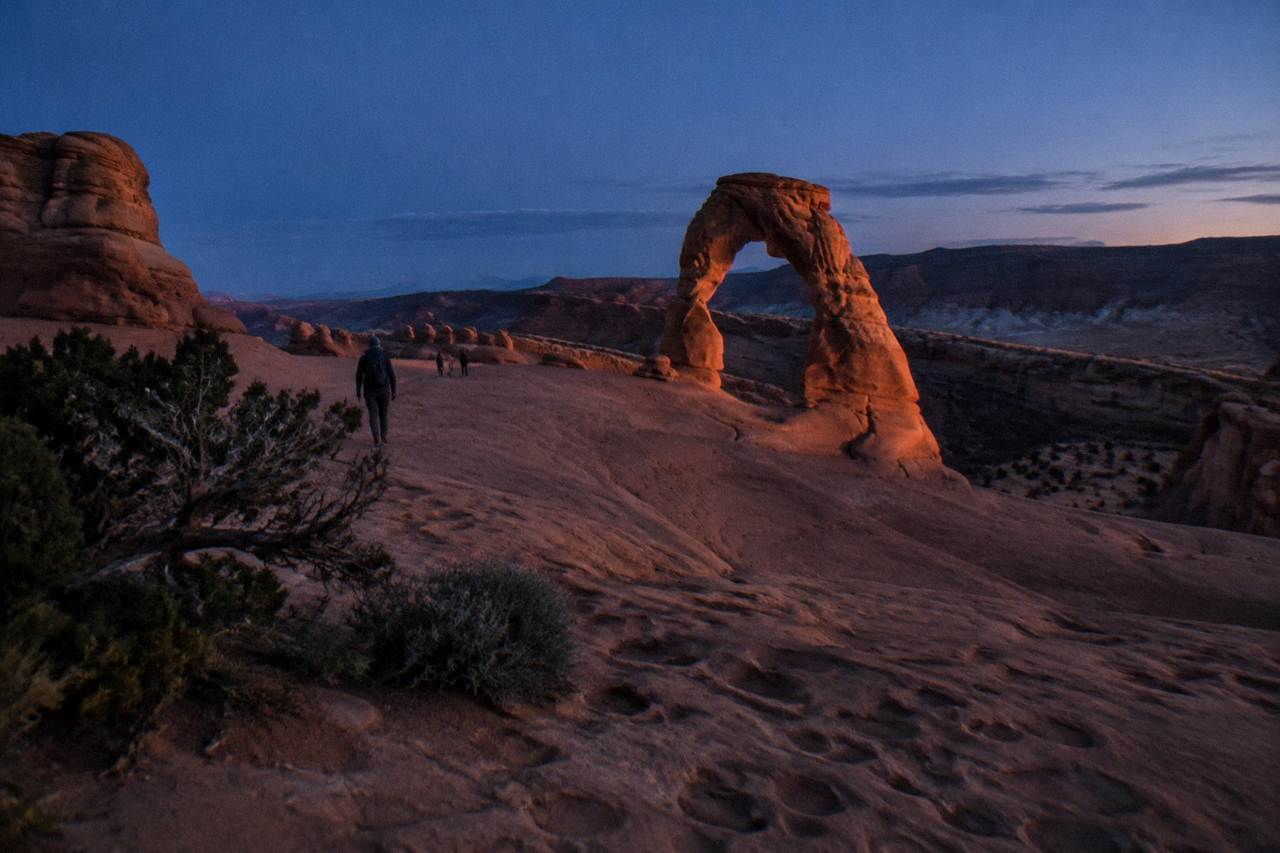
Both slots deliver, but they are different products: sunrise buys you cool air, empty parking lots and soft backlight on the formations, while sunset buys you the deep red glow on Delicate Arch that the park is famous for, shared with crowds that can number in the hundreds. The park's own numbers, its weather almanac and the tour schedules all tilt the choice, and this article lays them out side by side so you can match the slot to the tour you are about to book. Once you've chosen your light, the guide to Arches' must-see formations and trails covers everything else worth building your day around.
Which Time Of Day Gives Arches Its Best Light?
Sunrise is the better all-round slot from spring through early fall: the NPS says many trailhead lots fill by 7:30 am in summer, so arriving at dawn is the reliable way to park and hike in comfort, with July average highs of 100 F making afternoon exertion genuinely risky. Sunset wins on pure spectacle and convenience, and it is the slot most guided tours are built around, at the cost of sharing Delicate Arch with hundreds of others. And if you're still deciding whether Arches itself is the right fit for your Utah itinerary, our guide to choosing between Zion and Arches compares the scenery, crowds, and trip logistics side by side.
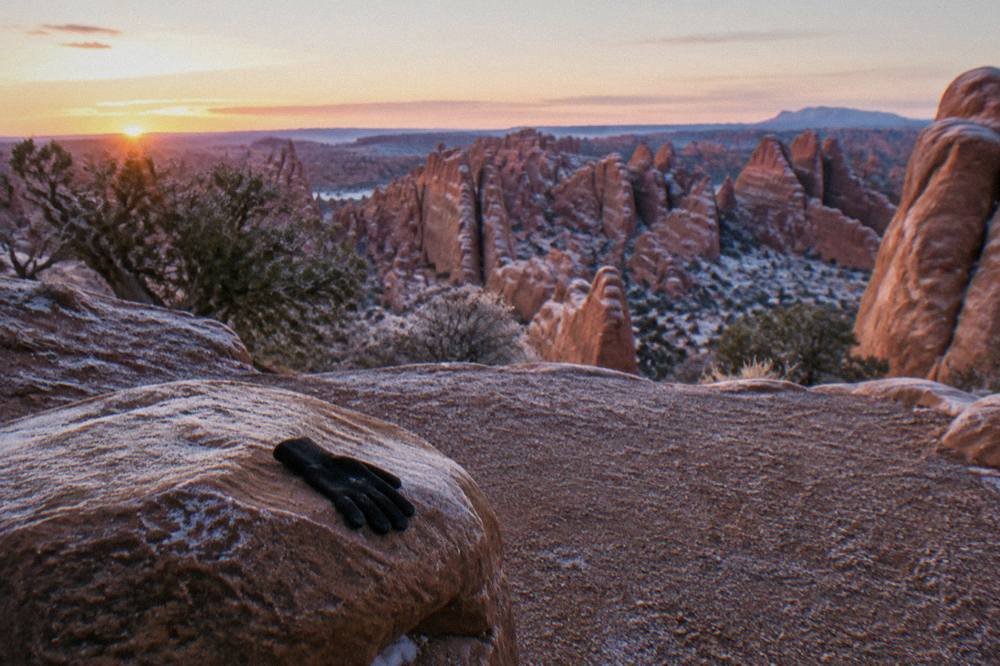
The choice is really three choices stacked together: light, temperature and crowds. Light first. The sandstone at Arches carries color at both ends of the day, but it behaves differently. At sunrise the light arrives low from the east and warms up gradually, so the fins and towers on the west side of a formation catch pink and gold before the sky fully brightens. It is a quieter, cooler-toned look. At sunset the process runs in reverse and faster, and the late light, coming through more atmosphere and often more dust, pushes the rock toward the intense orange and red that postcards are made of. Photographers who want drama lean sunset; photographers who want solitude lean sunrise.
Temperature matters more here than at most parks. The NPS weather page describes daily swings that can exceed 40 degrees, and July averages a high of 100 F with 16 days a month above 100 on average. The same page notes that late-summer monsoon storms can bring violent cells and flash floods. A sunrise start in July means hiking at 67 F, the average overnight low, rather than near the daily peak. In January, that logic flips: average lows sit at 22 F, and a sunrise start means ice on the trail, while the afternoon high near 44 F is far friendlier. So the season genuinely changes the answer, and we break that down month by month further down.
Crowds are the tiebreaker. The park receives about 1.5 million visits a year, concentrated March through October, and the NPS states that between March and October entrance waits may exceed 60 minutes. It also states that when parking areas reach capacity, staff may temporarily restrict access to specific locations, with restricted periods lasting 3 to 5 hours. Dawn is the one window where those pressures mostly have not built yet.
For travelers about to book, the tour calendar already encodes this trade-off. The morning side is anchored by the Morning Tour With Guided Hikes, and the evening side by the Sunset Tour With Guided Walks and the Small-Group Sunset Tour With Optional Stargazing. If you are weighing the two, this trio covers the honest middle of the decision:
What Does The Sun Time Table Look Like Month By Month?
Month by month, sun times at Arches swing enormously: sunrise runs from roughly 5:50 am in mid-June to roughly 7:30 am in early January, and sunset stretches from roughly 4:50 pm in December to roughly 8:35 pm in June. The table below lists approximate times computed for the park's coordinates, so allow about five minutes either way.
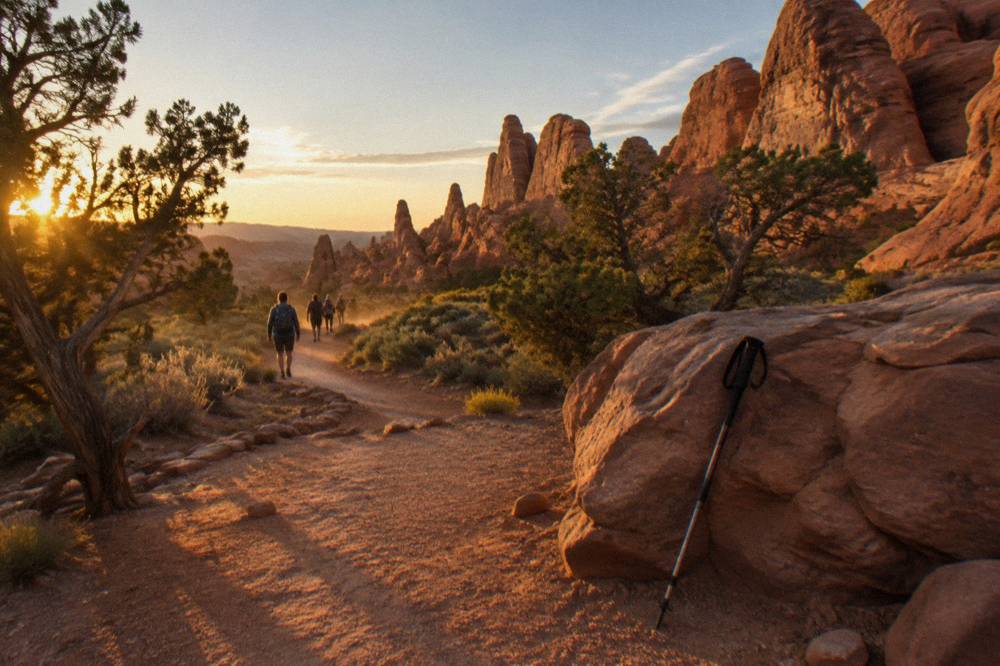
These are computed times, not official NPS figures; the park points visitors to external almanacs for exact numbers. Mountain time, with daylight saving applied where relevant.
| Date | Approximate sunrise | Approximate sunset | Daylight | What it means for the slot |
|---|---|---|---|---|
| Jan 15 | 7:32 am | 5:12 pm | ~9h 40m | Sunrise start at 22 F average low; afternoon near 44 F |
| Feb 15 | 7:07 am | about 5:50 pm | ~10h 45m | Icy mornings possible; sunset still early enough for dinner after |
| Mar 15 | 6:29 am | 6:15 pm | ~11h 45m | Mild both ends; crowds building toward peak |
| Apr 15 | 6:42 am | 7:46 pm | ~13h 05m | Sunrise around freezing, high near 71 F |
| May 15 | 6:10 am | 8:14 pm | ~14h 05m | Best of both; sunrise mild, sunset late |
| Jun 15 | 5:49 am | 8:35 pm | ~14h 45m | Earliest alarm, latest light; heat peaks midday |
| Jul 15 | 6:00 am | 8:30 pm | ~14h 30m | 100 F average high; dawn is the hiking window |
| Aug 15 | 6:22 am | 8:04 pm | ~13h 40m | Monsoon season; storm risk late day |
| Sep 15 | 6:46 am | 7:20 pm | about 12.5 hours | Ideal either end; highs near 88 F |
| Oct 15 | 7:13 am | 6:35 pm | ~11h 20m | Cool mornings near 42 F, gold light all day |
| Nov 15 | 6:46 am | about 5:00 pm | ~10h 15m | Short days; sunset before dinner |
| Dec 15 | 7:22 am | 4:52 pm | ~9h 30m | Darkest month; night sky arrives early |
Read the table with the crowd clock in mind rather than just the clock. The NPS recommends entering the park before 8 am or after 3 pm to avoid traffic, and notes that in summer many trailhead lots fill by 7:30 am. In June that means the sunrise slot and the "beat the traffic" window are almost the same thing. In December, the after-3 pm entry advice lands you inside the park at dusk, so the sunset slot effectively disappears and sunrise becomes a warm-up-in-the-car affair.
The stargazing angle is worth a sentence too. Arches is an International Dark Sky Park, and in winter the early sunset hands you four or five hours of dark sky without staying up past midnight. The Small-Group Sunset Tour With Optional Stargazing, from Moab In A Day, runs 3 hours from $189 per person, is rated 5.0 across 118 reviews, caps groups at 11, and offers an optional stargazing add-on after the main drive, which suits the short-day months. The listing states national park entry is not included, at $15 per person or free for up to four with one valid pass.
Why Does Sunset Own Delicate Arch?
The NPS Delicate Arch page says it plainly: sometimes hundreds of people will be at Delicate Arch for sunset. The 3-mile round-trip trail climbs 480 feet to the park's largest free-standing arch, a 46-foot-high opening, and the west-facing bowl lights up deep orange in the final hour before the sun drops behind the plateau. It is the single most concentrated light event in the park, and everyone knows it.
Sunrise at Delicate Arch is a different scene entirely. The arch faces roughly east toward the La Sal Mountains, so dawn light hits the opening and the bowl from the front, with the mountains catching pink behind it. The crowd is a fraction of the evening one, and the trailhead lot, which the NPS says fills early, is usually still passable at first light. The trade is backlight: the arch itself sits in shadow for much of the early morning, so photographers get silhouettes and rim light rather than glowing red rock. If your goal is the iconic shot, evening is the answer; if your goal is the arch almost to yourself, morning is.
The viewpoint option matters for tour planners. The Lower Delicate Arch Viewpoint is a level 100-yard walk that shows the arch from about a mile away, and the Upper Viewpoint adds a 0.5-mile stretch with stairs. Several evening tours use these: the Sunset Tour With Guided Walks from Moab Adventure Center, 4 hours from $142 per person and rated 4.8 across 141 reviews, includes guided walks and the Delicate Arch Overlook among its stops per the itinerary. Bring a pass, since park entry is not in its includes list. If you want the deeper comparison of the hike versus the viewpoint, the Delicate Arch by tour or viewpoint guide covers the decision in full.
One honest caveat on the evening gamble: sunset color is never promised. Cloud, haze and monsoon storm cells in late summer can mute the whole show, and the NPS describes those storms as sudden even when the day started sunny. Dawn has its own risk, cold and ice in winter, but the light window is longer and the stakes of a miss are lower.
How Do Heat And Season Change The Answer?
From June through August, sunrise is not just nicer, it is safer: the NPS almanac averages July at 100 F high and 16 days above 100, and rangers respond to hundreds of search and rescue incidents a year, many tied to heat. From November through February the advantage flips, with average lows between 22 and 30 F making afternoon the comfortable slot. April, May, September and October are genuinely good at both ends.
The full almanac tells the story in one sweep:
| Month | Avg high / low (F) | Days above 100 F | Better slot, honestly |
|---|---|---|---|
| Jan | 44 / 22 | 0 | Sunset (warmer) |
| Feb | 52 / 28 | 0 | Either, afternoon warmer |
| Mar | 64 / 35 | 0 | Either, crowds rising |
| Apr | 71 / 42 | 0 | Either |
| May | 82 / 51 | 1 (avg) | Sunrise, before heat builds |
| Jun | 93 / 60 | 6 | Sunrise, strongly |
| Jul | 100 / 67 | 16 | Sunrise, strongly |
| Aug | 97 / 66 | 12 | Sunrise, but watch monsoon storms |
| Sep | 88 / 55 | 1 | Either, superb month |
| Oct | 74 / 42 | 0 | Either |
| Nov | 56 / 30 | 0 | Sunset (warmer) |
| Dec | 45 / 23 | 0 | Sunset (warmer) |
Two seasonal details deserve their own weight. The late-summer monsoon, which the NPS describes as bringing violent storm cells that often cause flash floods, usually arrives in the afternoon, so an August sunset visit carries a small but real storm risk that a dawn start avoids. And winter, with its 30 to 50 F highs, makes midday the pleasant window, though the NPS notes that even small amounts of snow or ice can make trails and roads impassable, so check conditions before committing to either end of a winter day.
Guided tours track these seasons closely. The Morning Tour With Guided Hikes from Moab Adventure Center runs 4 hours from $148 per person, is rated 4.9 across 78 reviews, includes the park entrance fee, snacks, water and guided hikes, and offers pickup if that option is selected. It is the natural answer to a July or August trip, since a guided 4-hour block that starts in the morning is finished before the dangerous heat hours. Check availability if that slot matches your dates. For a wider look at the dawn options, see the sunrise and morning tours guide.
Which Tours Actually Run At Each End Of The Day?
The tours here split cleanly: one dedicated morning tour with guided hikes, and three evening options spanning $142 to $211 per person, plus a stargazing-add-on small-group tour at $189. Morning tours are the only ones that include the park entrance fee, which matters when you compare the real total cost of the two slots.
Here is the honest ledger from the listings, prices printed as each tour states them:
| Tour | Slot | Length | From | Rating | Park entry | Group max |
|---|---|---|---|---|---|---|
| Morning Tour With Guided Hikes | Morning | 4 h | $148 pp | 4.9 / 78 reviews | Included | Not stated |
| Sunset Tour With Guided Walks | Sunset | 4 h | $142 pp | 4.8 / 141 reviews | Bring a pass | Not stated |
| Small-Group Sunset Tour With Optional Stargazing | Sunset | 3 h | $189 pp | 5.0 / 118 reviews | Not included, $15 pp per listing | 11 |
| Private 3-Hour Sunset Tour | Sunset | 3 h | $211 pp | 5.0 / 21 reviews | Not included, $15 pp per listing | Not stated |
The cost comparison deserves a note beyond the sticker. The morning tour bundles the entrance fee, which is $30 per private vehicle or $15 per person on foot or bicycle at the NPS rate. The sunset tours mostly do not, so a $142 sunset walk plus a $30 vehicle pass lands within a few dollars of the $148 morning tour for anyone arriving by car. Neither slot is systematically cheaper; the format is what differs.
Format is the real differentiator. The morning product is built around hiking: the listing includes guided hikes as a core item. The Sunset Tour With Guided Walks also includes walks, but its stops per the itinerary lean toward the classic overlooks, including the Windows section and Balanced Rock, which several tours share. The Moab Tourism Center's Panoramic Van Tour, 4 hours from $159 per person and rated 5.0 across 879 reviews, also lists the Lower Delicate Arch Viewpoint and Windows among its stops, and includes the entrance fee, so it is a strong middle path for travelers who want the drive-and-stop format without a dawn alarm. For the full field, including the NAVTEC 4x4 backcountry options, the tours from Moab guide compares every format side by side.
How Do You Time Either Visit Around Traffic And Parking?
Enter before 8 am or after 3 pm, the NPS's own advice: between March and October the entrance wait may exceed 60 minutes, in summer many trailhead lots fill by 7:30 am, and when lots hit capacity staff can restrict access to specific locations for 3 to 5 hours. A sunrise visit clears both gates at once; a sunset visit clears the entrance gate but not the Lower Delicate Arch Viewpoint, which needs an arrival well before golden hour.
There is good logistical news for 2026: no timed-entry reservations are required this year, so visitors may enter at any time during operating hours with a valid pass, per the NPS announcement lifting the reservation requirement. Reservations still apply to Devils Garden Campground and Fiery Furnace hikes. And the Moab-Arches Shuttle ran as a 2026 pilot, free with a valid park pass, connecting downtown Moab to the visitor center, the Windows area and the Delicate Arch trailhead seven days a week, 8 am to 5 pm, with pickups every 15 to 30 minutes and a last Delicate Arch departure at 4:05 pm. Service for 2027 has not been announced. Once your timing and transport are sorted, you can go a step further and trade the crowds for the quieter arches and dark-sky corners covered in our guide to Arches' hidden gems.
Note what the shuttle does to the two slots. It supports a morning visit well: catch an early pickup, ride to Delicate Arch, hike in relative cool. It cannot deliver a sunset at Delicate Arch, since the last departure from that trailhead is 4:05 pm, well before even a winter dusk. So sunset seekers either drive themselves, arrive very early to hold parking, or take an evening tour whose operator manages the timing. That is a quiet but real argument for the guided evening options.
That last point is the budget traveler's secret: the $30 vehicle pass covers all occupants for seven days. Stay two or three nights in Moab and do both slots, sunrise one day, sunset the next, on a single entry fee. More on timing in the what time should you get to Arches breakdown.
So Which Slot Should You Book?
Book the morning slot if you are visiting May through September, hiking anything substantial, photographing for solitude, or traveling with kids in the heat; book sunset if your priority is Delicate Arch in peak color, if a 5 am alarm would ruin the trip, or if you are visiting November through February. In the shoulder months, do both: the seven-day vehicle pass makes it essentially free to try each once.
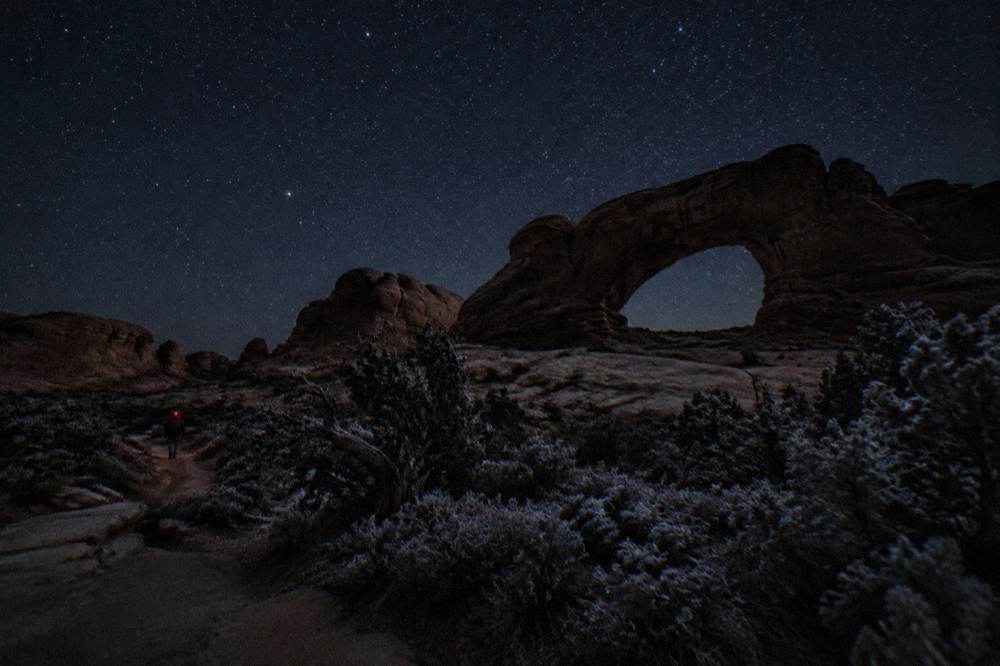
For tour bookers the mapping is simple. Among the morning tours here, one strong product is the Moab Adventure Center morning tour with its included entry and guided hikes, and it pairs naturally with a dawn-focused trip. The evening side is broader: the guided-walks sunset tour at $142, the stargazing small-group at $189, and the private sunset option at $211, each from Moab operators listed in the comparison above. Travelers comparing the whole evening field, including the photography-led options, will find more in the sunset tours and timing guide.
Whatever you choose, book the slot before you book the day. As Arches National Park Tours lays out in its tour picker, the three real decisions are format, slot and season, and the slot decision is the one that cannot be fixed later: the light only arrives on schedule, and the parking lots only empty on their own.
Whichever slot wins for you, the trio below covers the honest middle of the market:
Common Questions About Sunrise Or Sunset At Arches
Is Sunrise Or Sunset Better At Arches National Park?
Neither is universally better. Sunrise wins on cool temperatures, empty parking and soft light, especially May through September when July averages a 100 F high. Sunset wins on the iconic red glow at Delicate Arch and on convenience, at the cost of crowds that can number in the hundreds. Pick by season and by whether you want solitude or spectacle.
What Time Is Sunrise At Arches National Park?
Approximate sunrise runs from about 5:49 am in mid-June to about 7:32 am in mid-January, computed for the park's coordinates; allow about five minutes either way. In summer, aim to be at the trailhead before the 7:30 am fill time the NPS describes for many lots.
What Time Is Sunset At Arches National Park?
Approximate sunset runs from about 4:52 pm in mid-December to about 8:35 pm in mid-June. For the Delicate Arch sunset show, plan to be on the trail two to three hours before those times in peak season, since the NPS notes hundreds can gather and the trail is 3 miles round trip.
Do I Need A Reservation For Sunrise Or Sunset At Arches?
No. The park lifted its timed-entry reservation requirement for 2026, so you may enter at any time during operating hours with a valid entrance pass. Reservations still apply to Devils Garden Campground and Fiery Furnace hikes.
Which Tour Is Best For Sunrise At Arches?
The Morning Tour With Guided Hikes is the dedicated morning option among the tours on this site: 4 hours, from $148 per person, rated 4.9 across 78 reviews, with the park entrance fee, snacks, water, guided hikes and optional pickup included.
Is It Safe To Hike At Sunset In Summer?
It can be, but the NPS describes late-summer monsoon storms that can arrive suddenly and cause flash floods, so check the forecast and avoid washes and slickrock drainage when storms threaten. Evening temperatures are far more forgiving than midday in July, when the average high is 100 F.