Best Time To Visit Arches National Park: Month By Month For Tour Days
The best months for a tour day at Arches are April, May, mid-September and October, when daytime highs run 60 to 80 F and the park road is drivable at any hour. July and August push past 100 F and push tours to dawn and dusk, while winter brings thin crowds, short days and possible ice.
Short answer
April, May, mid-September and October are the best months to visit Arches: average highs of 60 to 80 F, manageable crowds and long daylight. July averages 100 F with 16 days above 100, so summer tours shift to morning and sunset. Winter is quiet, with December highs near 45 F and possible ice on trails.
Arches National Park receives about 1.5 million visits a year, and almost all of them arrive between March and October, the window the National Park Service itself describes as very busy. That single fact shapes the whole question of when to go. The park is open year-round, 24 hours a day, and in 2026 there is no timed-entry reservation, so the decision is not about whether you can get in. It is about heat, crowd density and light, three things that change sharply from month to month in the high desert.
Those same three variables decide which tour you should book. The Mild to Wild half-day tour at from $139 per person and the Moab Tourism Center panoramic van tour at from $159 per person run in the comfortable shoulder months exactly as they do in July, but a July booking is really a bid for an early start or a late finish. This guide walks through the year month by month, using the NPS climate averages, and connects each season to the tour formats that suit it, from the morning hike tour to the sunset stargazing run.
What Is The Best Month To Visit Arches National Park?
The best months to visit Arches National Park are April, May, mid-September, and October, when NPS climate averages show daytime highs of 60 to 80 F and lows of 30 to 50 F, a temperate range the park itself describes. July and August average 97 to 100 F with 12 to 16 days above 100, so guided itineraries shift toward morning and sunset departures.
The reason spring and fall dominate is not just comfort. It is the daily swing. The NPS weather page notes that temperatures in this high desert can swing more than 40 degrees in a day, so an October tour can start near freezing at 8 a.m. and finish in short sleeves by noon. That swing is workable on foot. A July swing from 67 to beyond 100 is not, which is why the guided-hike formats cluster their value in the cooler months and why summer visitors gravitate to sunset products like the small-group stargazing tour.
There is also a crowd gradient inside the busy season. The park recommends entering before 8 a.m. or after 3 p.m., and warns that entrance waits between March and October may exceed 60 minutes. A guided tour quietly solves that problem: you arrive with a group in a vehicle that has a plan, often at the edges of the day. For more on choosing a specific operator, the guide to which Arches tour to book breaks down the tours here by format.
How Does The Weather Change Month By Month At Arches?
The NPS almanac shows a steady climb from January's 44 F average high to July's 100, then a slide back to December's 45. Days above 100 F are rare outside summer: June averages 6, July 16 and August 12. Precipitation is modest all year, 8 to 10 inches annually, with July through October the wettest months at 0.9 to 1.2 inches, reflecting late-summer monsoon storms rather than steady rain.
Here is the full month-by-month picture from the NPS climate table, with average highs and lows in Fahrenheit and the average number of days above 100 F.
| Month | Avg high | Avg low | Days above 100 F | What it means for a tour day |
|---|---|---|---|---|
| January | 44 | 22 | 0 | Cold starts, short days, thinnest crowds |
| February | 52 | 28 | 0 | Quiet, variable, possible ice |
| March | 64 | 35 | 0 | Pleasant afternoons, crowds returning |
| April | 71 | 42 | 0 | Prime touring month |
| May | 82 | 51 | 1 | Warm afternoons, busy trailheads |
| June | 93 | 60 | 6 | Early starts matter |
| July | 100 | 67 | 16 | Heat shifts tours to dawn and dusk |
| August | 97 | 66 | 12 | Monsoon storm risk, flash floods possible |
| September | 88 | 55 | 1 | After mid-month, prime again |
| October | 74 | 42 | 0 | Best balance of warmth and light |
| November | 56 | 30 | 0 | Quiet, cold nights |
| December | 45 | 23 | 0 | Short days, occasional snow |
The NPS weather page adds two seasonal warnings worth planning around. Late-summer monsoon storms can bring violent cells and flash floods, so an August afternoon slot carries a real, if small, disruption risk. And in winter, even small amounts of snow or ice can make trails and roads impassable, which is the one condition that can genuinely cancel a tour day from December through February. The NPS conditions page is the place to check the week you travel.
For month-choosers, the practical takeaway is that the tour you pick interacts with the season. A 4-hour scenic van format works in any month, since you are out of the sun between stops. A guided-hike format is a spring and fall purchase. The trio below covers both instincts, and each listing shows the live price and calendar on its booking page.
Is Spring The Best Season For A Guided Tour?
Spring, specifically April and May, is arguably the strongest season for a guided tour: highs average 71 to 82 F, the park is fully operational, and every tour format offered on this site runs comfortably. The trade-off is crowds, March through May sits inside the busy window, and May trailhead lots can fill by 7:30 a.m. in the NPS's own words. A guided morning tour converts that early-morning pressure from a chore into an itinerary.
April is the quieter half of spring. May adds warmth and about one day above 100 on average, plus the fullest parking lots of the season so far. Both months reward the morning-departure products. The Morning Tour With Guided Hikes from Moab Adventure Center runs 4 hours from $148 per person, rated 4.9 across 78 reviews, includes the park entrance fee and offers pickup, and its guided short hikes are exactly what the mild spring temperatures are for.
Spring is also when the shuttle alternative appears. The Moab-Arches Shuttle ran as a 2026 pilot, seven days a week, 8 a.m. to 5 p.m., connecting downtown Moab with the visitor center, Windows and the Delicate Arch trailhead, free with a valid park pass. Service for 2027 has not been announced. It is a genuine option for a spring self-drive day, and it pairs well with the comparison in audio guide versus guided tour if you are weighing a $16.99-per-vehicle app against a live guide.
If spring dates are in your sights, the half-day format is the season's best value: it covers the Windows and Balanced Rock stops, includes the entrance fee and cold drinks, and even runs a junior ranger program for kids under 12.
The booking pages for these tours show live calendars, and spring weekends go first. Free cancellation up to 24 hours ahead is standard on most listings, so the usual play is to reserve the April or May date now and shift it if your travel dates move.
Is March A Good Time To Visit Arches National Park?
March is a genuinely good month: average highs of 64 F with lows around 35, almost no extreme heat, and crowds that are building but have not reached May density. It is also the first month of the park's own busy window, so entrance waits begin to appear and the NPS advice to enter before 8 a.m. or after 3 p.m. starts to matter. Layers are the packing story, since a 29-degree daily swing is normal.
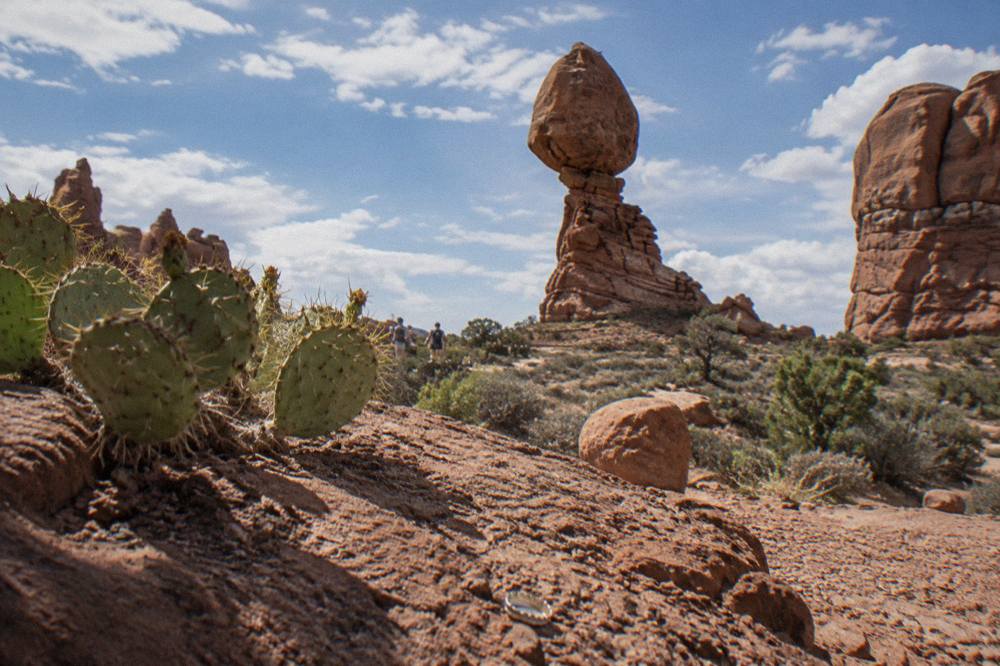
March suits the scenic and interpretive formats best. The panoramic van tour from Moab Tourism Center, 4 hours from $159 per person and rated 5.0 across 879 reviews, includes the entrance fee plus snacks and drinks, and a 64-degree afternoon at Balanced Rock is close to ideal van-tour weather. The same logic applies to the Mild to Wild half-day tour, whose cold-drinks inclusion reads differently in March than in July.
The one March caution is wind and variability. Early spring storms can move through, and conditions change fast; the NPS describes spring highs of 60 to 80 across April and May, with March sitting just below that band. Check the forecast the week before, and treat any single month's average as a planning range, not a promise.
Is Summer Too Hot For Arches Tours?
Summer is hot but tourable, and the formats adapt: July averages a 100 F high with 16 days above 100, August 97 with 12, so morning and sunset departures become the smart bookings. The NPS safety guidance is direct that summer temperatures often exceed 100 F and make strenuous activity difficult, and June through August is also when the 24-hour park genuinely earns its around-the-clock access.
This is the season that shifts demand to the edges of the day. The Small-Group Sunset Tour With Optional Stargazing from Moab In A Day runs 3 hours from $189 per person, rated 5.0 across 118 reviews, with pickup offered and a photography-focused small-group format, and its departure slot is designed for exactly the hours when July's heat breaks. Arches is an International Dark Sky Park, so the optional stargazing add-on has real dark-sky substance behind it.
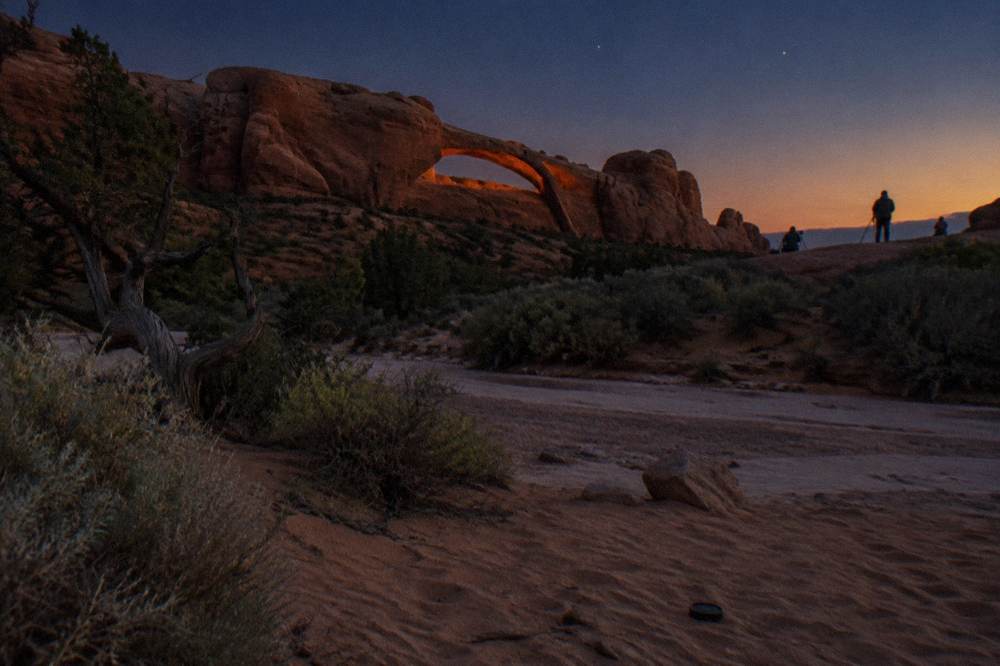
August adds the monsoon wrinkle: the NPS notes that late-summer storm cells often cause flash floods, and that floods can occur suddenly even under sunny skies upstream. A sunset booking in August is still a good bet, but keep the cancellation terms in mind and watch the forecast. The timing question gets a fuller treatment in the sunset tours and timing guide, and the sunrise side in morning tours at Arches.
For travelers who want summer scenery without summer walking, there is also the air. Redtail Air's 30-minute scenic flight, from $255 per person and rated 5.0 across 44 reviews, departs Canyonlands Field with live commentary, and an airplane cabin in July is the one seat in the region with guaranteed climate control.
Is Fall The Sweet Spot For A Visit?
Mid-September through October is the other prime window: highs slide from 88 to 74 F, days above 100 average just one in September and zero in October, and October's 0.5 inch of rain reflects the fading monsoon rather than storms. Fall light is also a photographer's argument, lower sun angles warm the sandstone for longer each evening, and the light-quality reasoning is laid out in the photography tours guide.
September before mid-month still carries summer heat and monsoon risk. From mid-month on, the park behaves the way first-time visitors hope it will. October is arguably the single best tour month on the calendar: 74-degree afternoons, 42-degree mornings that make a sunrise or sunset departure pleasant rather than punishing, and the closing weeks of the Moab-Arches Shuttle, which ran as a 2026 pilot. Service for 2027 has not been announced.
Fall is also the season for the big-combination days. A comfortable 8-hour itinerary is a different proposition at 74 degrees than at 97, which is why the full-day formats, from the $330 Canyonlands and Arches 4x4 to the $399 three-parks day tour, read best as fall bookings. The trade-offs of squeezing multiple parks into one day are compared in Arches and Canyonlands combo tours.
Crowds remain a fall factor, since October is still inside the March-to-October busy window the NPS describes. But the crowd character is gentler than May: more sunset watchers, fewer 7:30 a.m. parking scrambles at the trailheads.
What Is Winter Like In Arches National Park?
Winter is cold, quiet and short-dayed: highs average 30 to 50 F with lows of 0 to 20 in the NPS description, December sits at 45 and 23, and the season trades comfort for near-empty viewpoints. The real risk is ice, since even small amounts of snow can make trails and roads impassable, and ranger programs pause entirely until spring. The visitor center closes only on December 25.
For a traveler who wants Delicate Arch without hundreds of sunset companions, and the NPS does note that hundreds sometimes gather there at sunset in peak season, winter is the honest answer. Tour operations continue: the panoramic van tour and the half-day tour both run through the colder months, and a heated vehicle between stops is a winter feature, not a summer one.
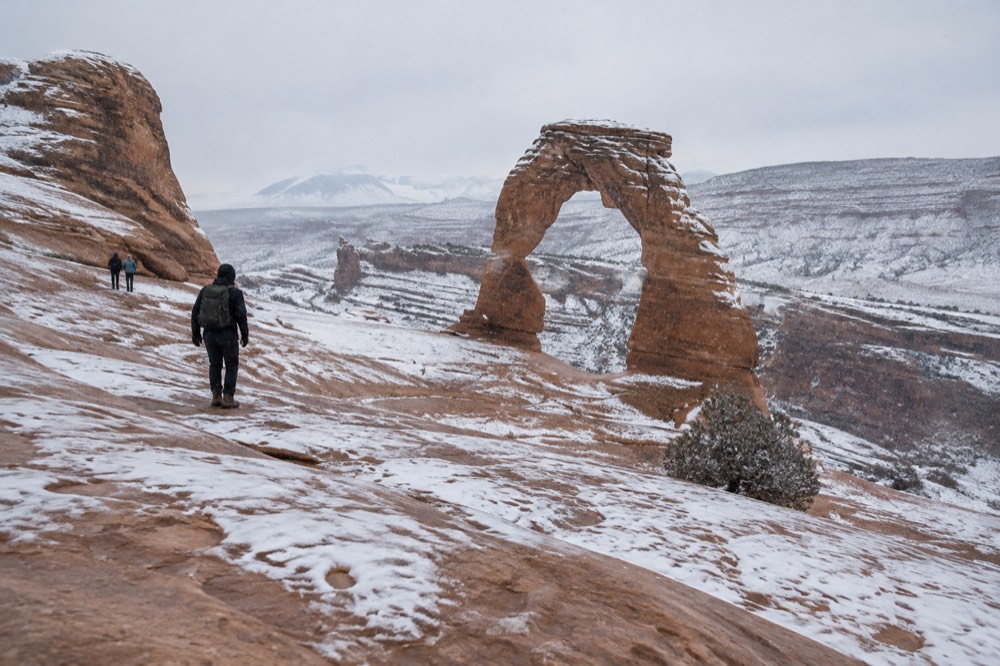
Winter planning has three practical rules. First, check the NPS conditions page the day before, because ice can close trails without warning. Second, book the shorter formats: a 3-hour sunset tour at from $189 or the 4-hour van tour at from $159 fit comfortably inside winter's compressed daylight. Third, if the forecast turns, the free-cancellation terms on most listings let you move a day without losing the booking.
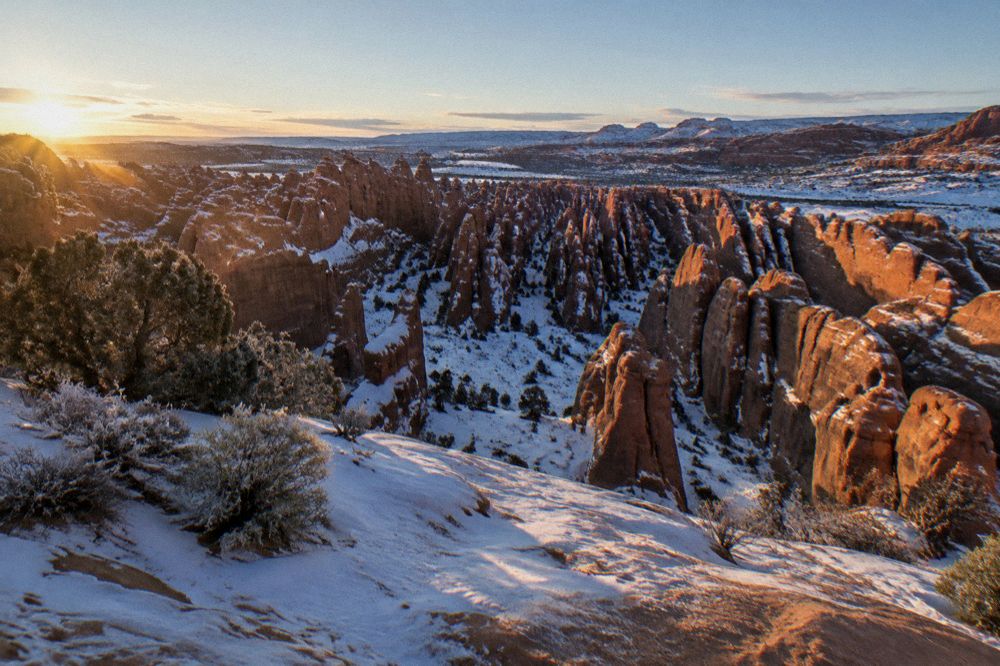
One more winter note for value hunters: the NPS lists 2026 fee-free days, including November 11, and several tours on this site state a $15 per person park entry figure or ask you to bring a pass. On a fee-free day the pass requirement is waived for US citizens and residents, which shaves a little off a self-drive or non-inclusive tour day. The full fee logic, including which tours include entry and which do not, is covered in what a tour price covers.
Is Arches National Park Crowded Now?
Crowds track the calendar closely: the NPS describes March through October as very busy, with entrance waits that may exceed 60 minutes and trailhead lots that can fill by 7:30 a.m. in summer. When lots reach capacity, staff may temporarily restrict access to specific locations, and those restrictions can last 3 to 5 hours, a fact many first-time visitors learn only after arriving. November through February is the quiet counterpart.
There is no timed-entry reservation in 2026, so the crowd-management tools are all behavioral: arrive before 8 a.m. or after 3 p.m., as the NPS recommends, use the free Moab-Arches shuttle, which ran as a 2026 pilot with no 2027 service announced, or hand the timing problem to a tour operator whose departure slot is already built around it. That last option is the quiet argument for guided tours in peak months. The NPS announcement lifting the reservation requirement confirms entry is open at any time during operating hours with a valid pass.
The month-by-month crowd picture, paired with the weather bands from earlier, compresses into one planning table.
| Season | Months | Crowd level | Heat risk | Best tour format |
|---|---|---|---|---|
| Early spring | Mar to mid-Apr | Moderate | Low | Any, including guided hikes |
| Late spring | Mid-Apr to May | High | Low to moderate | Morning tours, van tours |
| Summer | Jun to Aug | High | High, 100 F plus | Sunset and stargazing, flights, short van tours |
| Early fall | Sep 1 to 15 | High | Moderate, monsoon risk | Sunset tours, van tours |
| Prime fall | Mid-Sep to Oct | High but easing | Low | Everything, including full-day combos |
| Winter | Nov to Feb | Low | Cold and ice risk | Short van or sunset tours |
Which Tour Fits The Month You Are Booking?
Match the format to the temperature band: guided-hike and full-day tours belong to April, May and October; sunset and stargazing tours to June through August; short van formats work in any month including winter. Price spread across the guided tours on this site runs from $139 for the half-day tour to $425 for the photographer-led day, with flights from $255 and audio tours from $15.99 to $24.99 per vehicle, so season and budget can be solved together.
The three listings below are the ones this site compares most often for month-choosers: a full-day 4x4 driving and hiking format for the cool months, a sunset tour with guided walks for the hot ones, and a half-day 4x4 backcountry run from Moab. Each card shows the live price and the operator's cancellation terms, and the table after them compares five other featured formats by month.
Here is how the featured formats line up against the seasons discussed above.
| Tour | Length | From (per person) | Rating | Entry included | Best months |
|---|---|---|---|---|---|
| Half-Day Arches Tour (Mild to Wild) | 4 hours | $139 | 4.8 from 117 reviews | Yes | Any |
| Morning Tour With Guided Hikes | 4 hours | $148 | 4.9 from 78 reviews | Yes | Mar to May, Sep to Oct |
| Panoramic Van Tour (Moab Tourism Center) | 4 hours | $159 | 5.0 from 879 reviews | Yes | Any, incl. winter |
| Small-Group Sunset With Optional Stargazing | 3 hours | $189 | 5.0 from 118 reviews | No, listing states $15 | Jun to Sep |
| Self-Guided Audio Tour | Self-paced | $16.99 per vehicle | 4.4 from 315 reviews | No | Any, self-drive |
Whatever month you land on, the same booking logic applies: reserve early for the April-to-May and September-to-October peaks, lean on free-cancellation terms when the season carries weather risk, and let the operator's departure slot do the crowd-avoidance work for you. Arches National Park Tours compares every tour side by side if you want to see all formats and prices on one page.
Common Questions About The Best Time To Visit Arches
Is March A Good Time To Visit Arches National Park?
Yes. March averages a 64 F high and a 35 F low, with essentially no extreme-heat days. Crowds are building but below May levels, and every tour format runs. Pack layers for a daily swing that can exceed 30 degrees, and check the NPS conditions page for any late-winter ice.
Is Arches National Park Crowded Now?
From March through October, yes, the NPS describes the park as very busy, with entrance waits that may exceed 60 minutes and summer trailhead lots that can fill by 7:30 a.m. Access restrictions when lots fill can last 3 to 5 hours. November through February is much quieter. In 2026 there is no timed-entry reservation, so arriving before 8 a.m. or after 3 p.m., or booking a tour with a well-timed departure, is the practical crowd strategy.
What Is The Hottest Month At Arches?
July, with an average high of 100 F and an average of 16 days above 100. August is close behind at 97 F and 12 days above 100. In those months, morning and sunset tour departures are the comfortable options, and the NPS safety guidance warns that heat makes strenuous activity difficult.
Can You Visit Arches In Winter?
Yes. The park is open year-round, 24 hours a day, and winter highs average 30 to 50 F with lows of 0 to 20. Tours including the panoramic van and half-day formats keep running. The main risk is ice, which the NPS says can make trails and roads impassable even in small amounts, so check conditions before you go.
Does It Rain At Arches?
Not much, about 8 to 10 inches a year. The wettest stretch is July through October, at roughly 0.9 to 1.2 inches per month, driven by late-summer monsoon storms that can cause flash floods. Spring is drier on average.
When Should I Book A Tour For The Best Weather?
Aim for April, May, mid-September through October, when highs run 60 to 80 F per the NPS averages. Book those dates early since they are the most requested, and use the free-cancellation terms most listings carry to hold your spot while travel plans firm up.