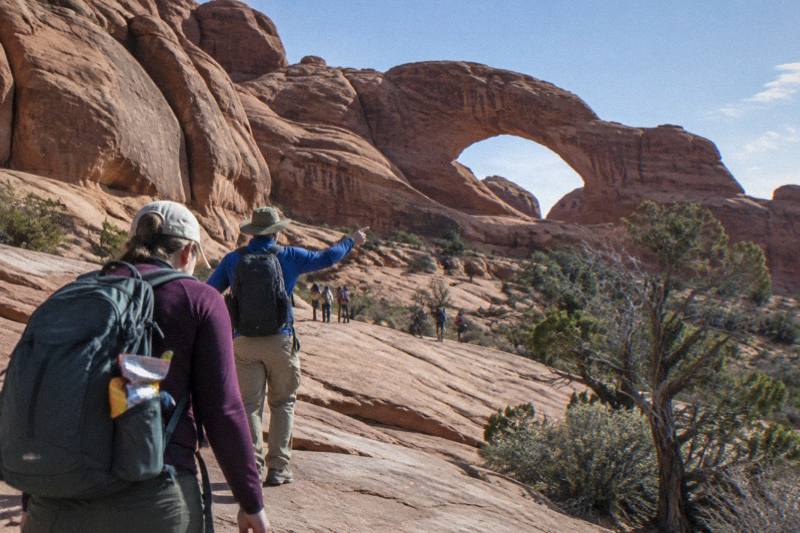
What To Bring On An Arches National Park Tour: Water, Shoes And Layers
The desert around Moab swings more than 40 degrees between afternoon and midnight, so what you carry matters as much as what you book. Here is the packing picture for a guided tour of Arches, season by season.
Short answer
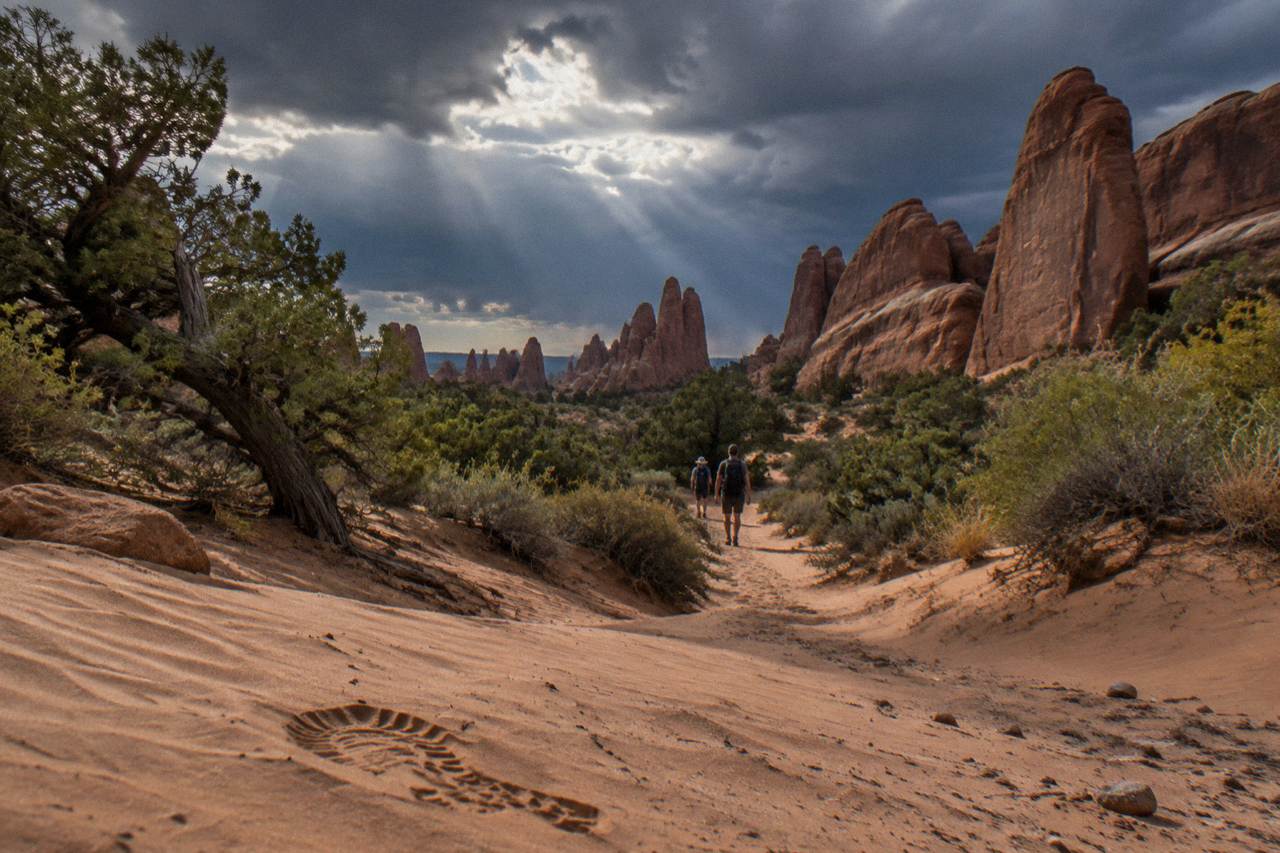
Bring one gallon of water per person per day, closed-toe shoes with grip, sun protection and three layers you can shed. Summer highs average 97 to 100 F and winter lows sit between 0 and 20 F, so the packing list changes sharply by month. Most guided tours supply water and snacks; check the listing before you duplicate them.
Arches National Park sits at the northern edge of the Colorado Plateau, where the air is dry, the rock holds heat late into the evening, and the gap between the day's high and the night's low can exceed 40 degrees. The National Park Service weather page describes exactly that: spring and fall highs of 60 to 80 F with lows of 30 to 50 F, summer afternoons that often exceed 100 F, and winter nights between 0 and 20 F. Packing for a tour here is less about specialized gear and more about matching a short list to the right month.
The NPS also counts its rescue workload: rangers respond to hundreds of search and rescue incidents a year, many involving heat, sun and twisted ankles. That is the practical case behind the three items that dominate every packing question for this park, water, footwear and layers. This guide works through each one, then covers what your tour operator already provides so you do not carry duplicates, plus sun gear, camera kit and senior-specific answers. The same questions shape the morning tour with guided hikes from Moab Adventure Center, which lists snacks, water, park entry and optional pickup in its includes, a useful baseline for what a guided half day handles for you.
What Should You Wear To Arches National Park?
Dress in three light layers you can shed across the day: a breathable base, a warm mid-layer and a wind-blocking shell, with long sleeves and a hat for sun rather than shorts and tank tops. The NPS weather page shows daily swings above 40 degrees are normal, so a single outfit chosen for the afternoon will be wrong by sunset, and sun exposure is a bigger problem than heat alone.
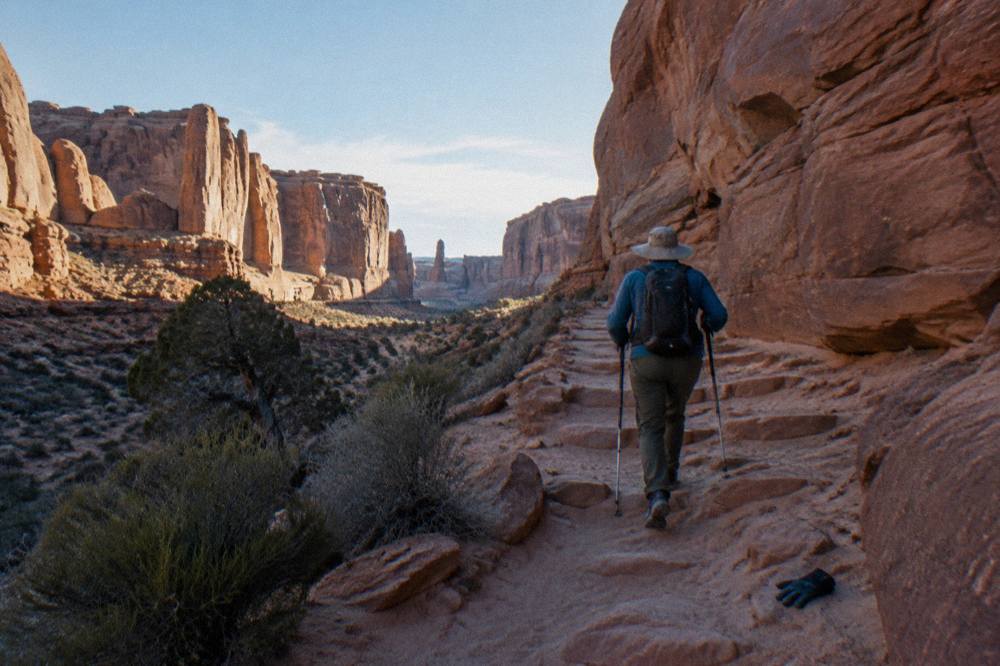
The single most common wardrobe mistake at Arches is dressing for the temperature at the trailhead. A July morning can start at a comfortable 67 F, climb past 100 F by mid afternoon and fall back through the 80s while you are still standing at Delicate Arch for sunset, which the NPS notes sometimes draws hundreds of people. Loose, light-colored, long-sleeved synthetic or merino layers beat exposed skin in this climate: they shade you from a sun that is intense at 4,085 feet at the visitor center rising to 5,653 feet at Elephant Butte, and they cut the wind that funnels through the fins in the evening.
Fabric choice matters more than brand. Cotton holds sweat and stays clammy when the temperature drops, which is a comfort problem at sunset and a genuine hazard in winter. Synthetics and wool dry fast and keep insulating when damp. For a half-day tour, one base layer plus one packable insulating layer plus a light wind shell covers March through October almost regardless of forecast, because the forecast will move more than the layers will.
A wide-brim hat, sunglasses and a neck gaiter round out the sun kit, and the hat earns its space twice over by cutting both sun and the glare that bounces off the sandstone. The park prohibits artificial light used to illuminate rock features at night, so plan for headlamps with red-light modes for stargazing rather than lighting up the formations; Arches is an International Dark Sky Park and the rules protect that status.
| Season | Base layer | Mid layer | Outer layer | Notes |
|---|---|---|---|---|
| Spring (Mar to May) | Light long sleeve | Fleece or light puffy | Wind shell | Highs 64 to 82 F, lows 35 to 51 F |
| Summer (Jun to Aug) | Loose, light-colored, UPF-rated | None or ultralight | Packable wind layer | Afternoons often exceed 100 F |
| Fall (Sep to Nov) | Light long sleeve | Fleece or puffy | Wind shell or light rain | Highs 56 to 88 F, lows 30 to 55 F |
| Winter (Dec to Feb) | Wool or synthetic base | Insulated jacket | Windproof shell | Lows 0 to 20 F; ice possible |
For a deeper look at how the crowds and light shift across the calendar, the best time to visit month by month guide pairs this packing table with the visit-planning side of the same decision.
How Much Water Do You Need On An Arches Tour?
Plan on one gallon, four liters, per person per day in summer and at least two liters even on a short half-day tour in cooler months; the NPS requires every Fiery Furnace hiker to carry a minimum of one quart or liter, and its safety page attributes many of the park's hundreds of annual rescues to heat and sun. Drink before you feel thirsty.
Water is the item that turns a good day into a rescue statistic. The park receives only 8 to 10 inches of precipitation a year, the air is dry enough that you stop noticing sweat, and the sun loads heat into black and red rock all afternoon. On a four-hour guided tour you may only walk a few miles, but you will do it in conditions that quietly pull moisture out of you the whole time.
The good news for tour guests is that most operators carry water for you. The Mild to Wild half-day tour with park entry includes cold drinks; the NAVTEC backcountry 4x4 tours include ice water and lemonade; the Moab Tourism Center panoramic van includes drinks and snacks; the Moab In A Day tours include water refills and snacks. Only a handful of listings expect you to bring everything, so read the includes list on the live listing before you load a daypack. If your tour supplies water, your job is a bottle you can refill and electrolyte tabs for the hottest months.
Bottle strategy is simple: capacity plus insulation. A one-liter insulated bottle keeps water drinkable through a July afternoon when a plain plastic bottle turns to tea. For photographers and hikers stretching past the tour window, a two-liter reservoir in a small daypack is easier to actually drink from than any bottle you have to stop and unscrew. Whatever the container, salty snacks help you retain what you drink, which is why trail food belongs in the same pocket as the water.
| Situation | Water to carry | Backup |
|---|---|---|
| Summer half-day guided tour | 2 liters, plus tour supply | Electrolyte tablets |
| Summer self-driving day | 4 liters per person | Extra in the car |
| Spring or fall guided tour | 1 to 2 liters | Tour usually supplies |
| Winter tour | 1 liter | Insulated bottle so it does not freeze |
| Any hike toward Delicate Arch | 1 liter minimum on the trail | Fill at the visitor center |
How much you carry also depends on how you see the park. A comparison of guided and self-guided options, including the audio driving tours that cost from $15.99 to $24.99 per vehicle and include no supplies at all, is covered in the self-guided audio versus guided tour guide.
The trio below spans the packing spectrum: a morning hike tour that supplies water and snacks, a sunset walk tour where layers matter most, and a full-day 4x4 and hiking combination where you are out through every temperature swing of a nine-hour day.
What Shoes Work Best For Arches Trails?
Closed-toe shoes with real tread and ankle support are the right choice: the sand is deep in places, the slickrock is polished smooth where thousands of feet have crossed, and the NPS Fiery Furnace rules ban sandals outright on that terrain, a strong hint about the rest of the park. Trail runners work on most tour stops; boots help on the longer hikes.
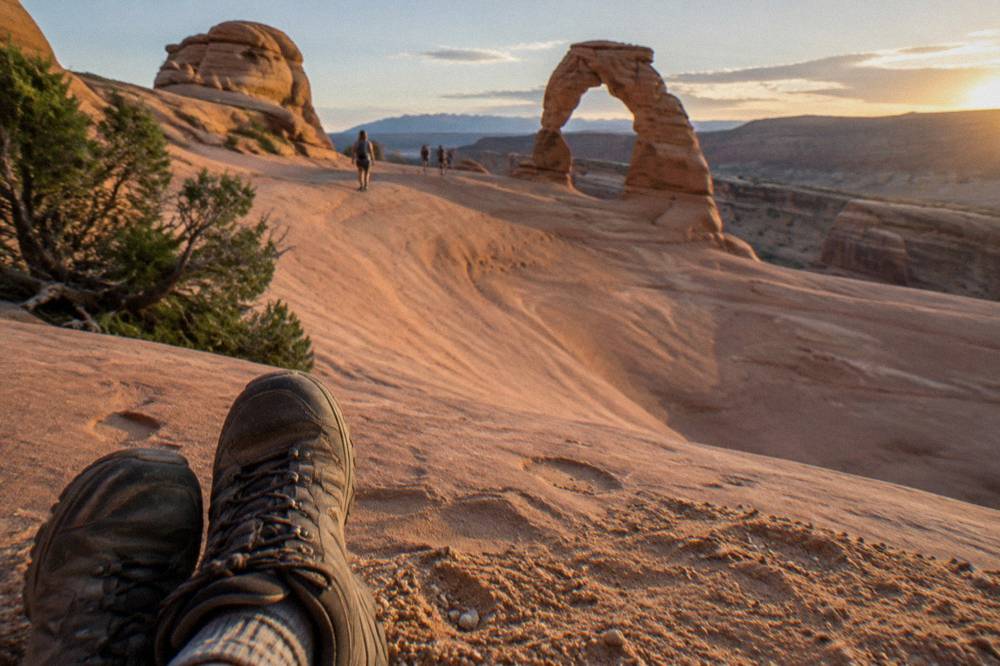
Arches punishes two kinds of footwear: flip-flops and brand-new boots. The flip-flop problem is obvious on sand and steep rock, but the new-boot problem sneaks up on people who buy shoes the week before the trip and then walk five miles on a hot afternoon. Break shoes in before you travel, whatever they are.
For the stops a typical tour makes, Windows, Balanced Rock and the viewpoints, almost any comfortable athletic shoe with tread is fine, because the walking is short and paved or graded. The panoramic van tour and the Mild to Wild half-day tour both build in stops of that type. When the itinerary adds guided walks, as the Moab Adventure Center morning and sunset tours do, trail shoes with grip matter more, since the sandstone slabs are slick where they are polished and crumbly where they are not.
The Delicate Arch trail is the benchmark: the NPS describes it as 3 miles round trip with 480 feet of climbing, much of it on bare sloping sandstone. For that walk, and for the full-day NAVTEC hike-and-4x4 tour with a minimum age of 8, a shoe with a sticky outsole and some ankle structure is worth the suitcase space. In winter, the same trails can hold snow and ice that the NPS says can make trails and roads impassable even in small amounts, and its winter guidance recommends traction devices and trekking poles.
Gaiters are overkill for most visitors. Socks are not: a merino or synthetic pair that does not hold sweat will do more for your feet on hot sand than any upgrade to the shoe itself.
| Activity on your tour | Minimum footwear | Better choice |
|---|---|---|
| Viewpoint and Windows stops | Any closed-toe athletic shoe | Light trail runner |
| Guided walks, morning or sunset tour | Trail runner with grip | Mid hiking shoe |
| Delicate Arch trail (3 miles, 480 ft) | Trail runner with good tread | Light hiker with ankle support |
| Full-day hike and 4x4 tour | Light hiker, broken in | Boot plus trekking poles |
| Winter visit | Waterproof shoe | Traction devices and poles |
Choosing shoes is easier once you know how much walking your itinerary actually contains, and the which tour to book guide breaks that down listing by listing.
How Do You Pack Layers For The Temperature Swings?
Pack a system, not an outfit: a base layer you can hike in at noon, an insulating layer for the 4 p.m. slide, and a wind shell for sunset, because the NPS almanac shows monthly average highs of 100 F in July against lows of 22 F in January, and the swing within a single day can top 40 degrees in any season.
The number that surprises first-time visitors is not the summer high, it is the same-day low. A September day can run 88 F at lunch and 55 F before the drive back to Moab. A January afternoon at 45 F can follow a morning at 23 F. Layers are the only packing answer that covers both halves of the day without a wardrobe change, and a small daypack to store the shed layers in is as important as the layers themselves. Everything else covered here is indexed on Arches National Park Tours.
The wind deserves its own mention. The same rock fins that make the park photogenic funnel and accelerate wind, and sunset viewpoints are exposed. A shell that blocks wind, rather than a knit sweater that lets it through, is what keeps people at the viewpoint instead of retreating to the vehicle. On stargazing evenings, which the park actively encourages as an International Dark Sky Park, the shell plus beanie and gloves make the difference between staying an hour and leaving in ten minutes.
Winter travelers should take the NPS winter guidance seriously: small amounts of snow or ice can make trails and roads impassable, and the park road can close for plowing. That is a traction and layering problem at once, solved by insulated footwear, microspikes if you already own them, poles, and a genuine insulated parka rather than a compressed puffer. The payoff is that winter is the quiet season, with none of the March-to-October entrance waits the NPS says can exceed 60 minutes.
| Month | Average high / low (F) | Days above 100 F | Packing emphasis |
|---|---|---|---|
| January | 44 / 22 | 0 | Insulated layers, traction |
| February | 52 / 28 | 0 | Warm layers, sun protection |
| March | 64 / 35 | 0 | Three layers, wind shell |
| April | 71 / 42 | 0 | Layers, extra water |
| May | 82 / 51 | 1 | Sun kit, electrolytes |
| June | 93 / 60 | 6 | Full sun kit, one gallon water |
| July | 100 / 67 | 16 | Peak heat plan, hike early |
| August | 97 / 66 | 12 | Heat plus monsoon rain shell |
| September | 88 / 55 | 1 | Water plus sunset layers |
| October | 74 / 42 | 0 | Full layer system |
| November | 56 / 30 | 0 | Warm layers, beanie |
| December | 45 / 23 | 0 | Winter kit, traction |
Late summer adds one more item: the monsoon. The NPS safety page describes violent storm cells from late summer moisture that can cause flash floods even under a sunny sky in one canyon while it rains in another, so a light rain shell belongs in the daypack from July through September even on a cloudless morning.
The sunset question interacts with layers more than any other part of the day, and the sunset tours, spots and timing guide covers the timing side of standing outside while the temperature drops.
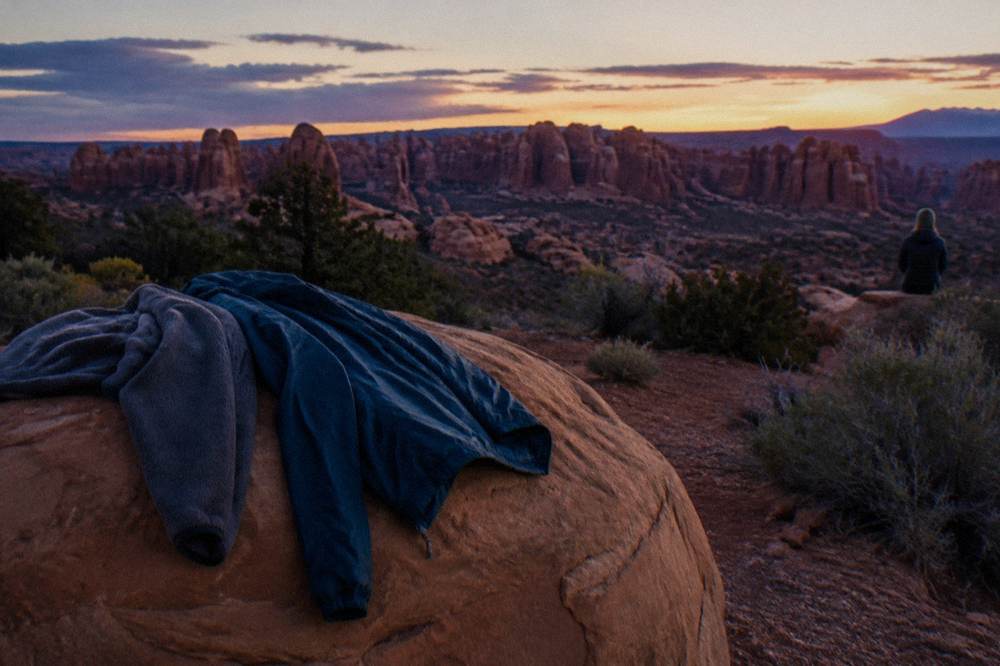
Is Arches National Park Suitable For Seniors?
Yes, in the format the park's own access improvements support: all-terrain wheelchairs are now available for select trails including the Lower Delicate Arch Viewpoint, every major arch is reachable by vehicle plus a short walk, and road-based tours such as the panoramic van (5.0 across 879 reviews, from $159 per person) require no hiking at all, while the senior lifetime America the Beautiful pass costs $80.
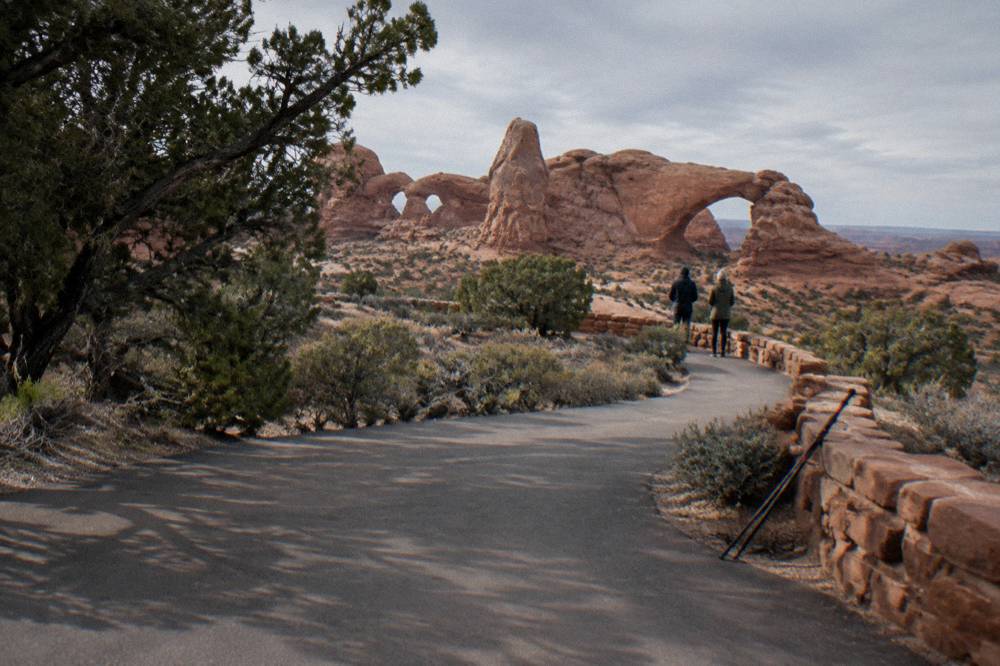
The honest answer for seniors is that Arches is unusually well suited to a vehicle-plus-short-walk style of visiting. The main park road strings together Balanced Rock, the Windows section and the Delicate Arch viewpoints with parking close to each, and the lower Delicate Arch viewpoint is a level 100-yard walk per the NPS, with the arch visible from a mile away. The Moab-Arches shuttle ran as a 2026 pilot, free with a valid park pass, seven days a week from 8 a.m. to 5 p.m., connecting downtown Moab to the visitor center, Windows and the Delicate Arch trailhead so visitors could skip the park road entirely. Service for 2027 has not been announced.
Packing for a senior visit leans on the same three items with small adjustments: more water discipline, since older bodies regulate heat less loudly; better shoes, since the polished sandstone does not forgive; and the layers already described, with a folding stool or trekking pole for the waits at viewpoints. The NPS fee structure helps too: the Senior Lifetime pass is $80 and covers one private vehicle fee or four per-person fees, and the annual Arches-and-Canyonlands pass at $55 applies to US citizens and residents of any age.
The tour format matters more than the packing list for comfort. A van-based tour with a 14-person maximum, like the Moab Tourism Center panoramic option, keeps everyone in air conditioning between stops and includes the park entrance fee in the price. A small-group sunset tour like the Moab In A Day option, 5.0 across 118 reviews, from $189 per person with a group capped at 11, trades a little more standing time for a photographer's eye and a slower pace. The detailed comparison, including accessibility notes per listing, lives in the easy Arches tours for seniors and limited mobility guide.
What Does Your Tour Guide Already Provide?
Most Arches tours supply water, snacks and the vehicle: the panoramic van includes drinks, snacks and park entry; the Mild to Wild half-day includes cold drinks and a junior ranger program; the NAVTEC 4x4 tours include ice water and lemonade; the full-day tours add lunch, so the packing you actually need is shoes, layers and personal sun gear, not catering.
This is where travelers overpack. The includes lists for the tours on this site are generous: the full-day Canyonlands-and-Arches 4x4 from NAVTEC, 9 hours, from $330 per person, includes lunch with ice water and lemonade; the full-day Arches hike-and-4x4, from $337 per person, adds a buffet-style picnic lunch; the one-day Arches, Canyonlands and Dead Horse Point tour from Moab In A Day, from $399 per person, includes a light picnic lunch, snacks and hotel pickup between 7:00 and 7:15. If your tour feeds you and waters you, your daypack holds clothing, camera and medication, and nothing else.
The one inclusion to check carefully is park entry. Only three listings on this site include the entrance fee in the price: the panoramic van tour, the Mild to Wild half-day and the Moab Adventure Center morning tour with guided hikes. Every other listing expects a pass or the per-person entry fee, which several listings state as $15 per person while the NPS fee schedule lists $30 per private vehicle, $25 per motorcycle and $15 per person on foot or bicycle, each valid for seven days. America the Beautiful pass holders are covered for one vehicle fee or four per-person fees. The full breakdown, including which tours include what, is in the entrance fee and tickets guide.
| Tour (operator) | Water and food on the listing | Park entry |
|---|---|---|
| Panoramic van (Moab Tourism Center) | Snacks and drinks | Included |
| Half-day tour (Mild to Wild) | Cold drinks; junior ranger program for kids under 12 | Included |
| Morning tour with hikes (Moab Adventure Center) | Snacks and water | Included |
| Sunset tour with walks (Moab Adventure Center) | Snacks and water | Bring a pass |
| Backcountry 4x4 with dinosaur tracks (NAVTEC) | Ice water and lemonade | Not included; listing states $15 per person |
| Full-day Canyonlands and Arches 4x4 (NAVTEC) | Lunch, ice water, lemonade | Not included |
| Three parks in one day (Moab In A Day) | Picnic lunch, snacks, water refills | Not included; free with a pass for up to 4 |
| Photography day tour | Cold water, snack bars, photo coaching | Bring a pass |
Gratuities sit on the excludes list of nearly every listing, so cash or a card tip for the guide is the one supply almost no tour carries for you.
What Else Belongs In The Daypack?
Sun protection, a headlamp with a red-light mode, salty snacks, any personal medication plus blister care, and a dry bag for the monsoon months; add trekking poles and traction in winter, and leave the drone at home, because unmanned aircraft are prohibited in the park, as is artificial light used to illuminate the rock features at night.
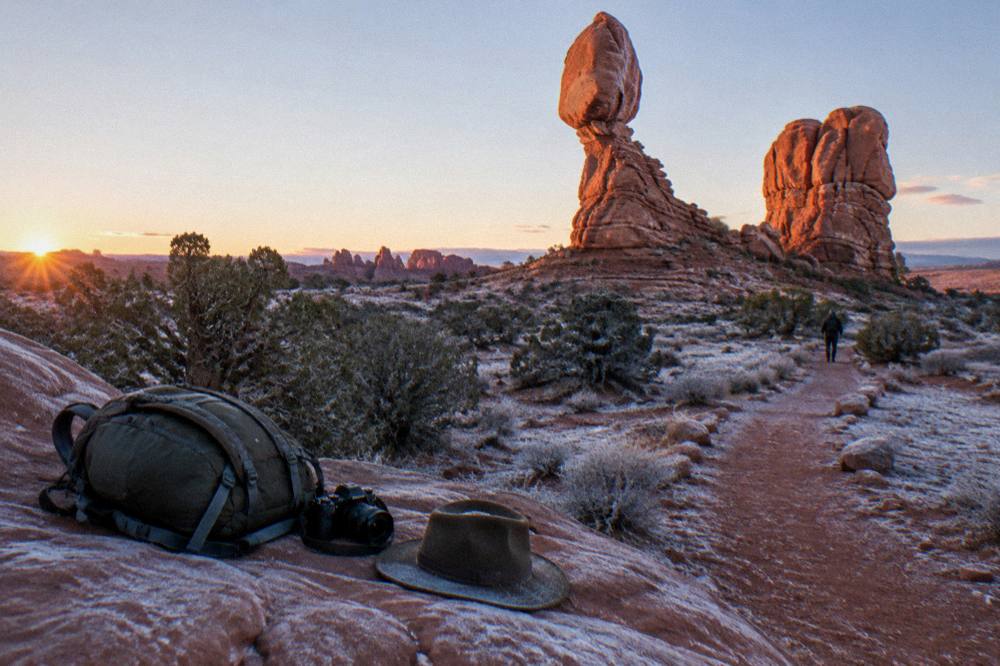
The rest of the list is short because the desert is short on excuses. Sunscreen and lip balm need reapplying, not just packing: sweat and wind strip both faster than at sea level, and the elevation, 4,085 feet at the visitor center rising to 5,653 at Elephant Butte, means more ultraviolet than most visitors are used to. A small first-aid kit built around blister care handles the majority of minor incidents rangers describe.
Photographers should plan around light, not weight. The park prohibits drones and prohibits lighting the formations, so the aerial shot is out and the illuminated-arch night shot is out; what remains is golden-hour work, which is exactly what the photography-focused tours optimize for. The photographer-led Arches-and-Canyonlands day tour, from $425 per person with a group capped at 6, runs sunrise to after sunset and includes photography tips from the guide, which changes what glass you pack more than any clothing choice. The photography tours guide covers the full kit.
Two rules of thumb close the list. First, pack for the person, not the group: kids under 12 on the Mild to Wild tour get a junior ranger program, but they still need their own liter of water and their own hat. Second, pack for the exit, not the entrance: the item people regret missing is almost never needed at the trailhead, it is needed at 8 p.m. at a dark viewpoint, and it is almost always a warm layer. The NPS hours page notes the park is open 24 hours a day year-round, and the stargazing after a sunset tour is the reason that matters.
The trio below pairs the two Moab Adventure Center half days with the full-day hike-and-4x4 combination, three different packing problems in one comparison.
Common Questions About Packing For An Arches Tour
How Much Water Should I Bring To Arches National Park?
Plan on at least two liters per person for a half-day tour and closer to four liters, one gallon, for a full summer day. The NPS requires a minimum of one quart or liter per person even on the Fiery Furnace hike, and most guided tours already include water or refills in the price, so check the includes list before you carry duplicates.
Is Arches National Park Suitable For Seniors?
Yes. The main road puts every major arch within a short walk of parking, the lower Delicate Arch viewpoint is a level 100-yard walk, all-terrain wheelchairs are now available for select trails, and road-based tours such as the panoramic van require no hiking at all. The $80 Senior Lifetime pass covers one private vehicle fee.
Do I Need Hiking Boots For Arches?
You need closed-toe shoes with real tread. Trail runners handle most tour stops and the Windows section; the 3-mile Delicate Arch trail with 480 feet of climbing rewards a stickier sole and some ankle support. Sandals fail on both deep sand and polished slickrock, and the NPS bans them outright on Fiery Furnace terrain.
What Should I Wear To Arches In The Summer?
Loose, light-colored, long-sleeved synthetic layers, a wide-brim hat and sunglasses. July averages a high of 100 F with 16 days above 100 each month, and the NPS recommends entering before 8 a.m. or after 3 p.m. to avoid both heat and the entrance waits that can exceed 60 minutes between March and October.
Do Arches Tours Include Water And Snacks?
Most do. The panoramic van includes snacks and drinks, the Mild to Wild half-day includes cold drinks, the Moab Adventure Center tours include snacks and water, and the full-day NAVTEC and Moab In A Day tours include lunch. The audio driving tours from $15.99 to $24.99 per vehicle include nothing but the app, so self-guided drivers carry everything.
Can I Fly A Drone Or Light The Arches At Night?
No to both. Unmanned aircraft are prohibited throughout the park, and using artificial light to illuminate rock features is prohibited as well, a rule that protects Arches' status as an International Dark Sky Park. A headlamp with a red-light mode is the accepted tool for moving around after dark.