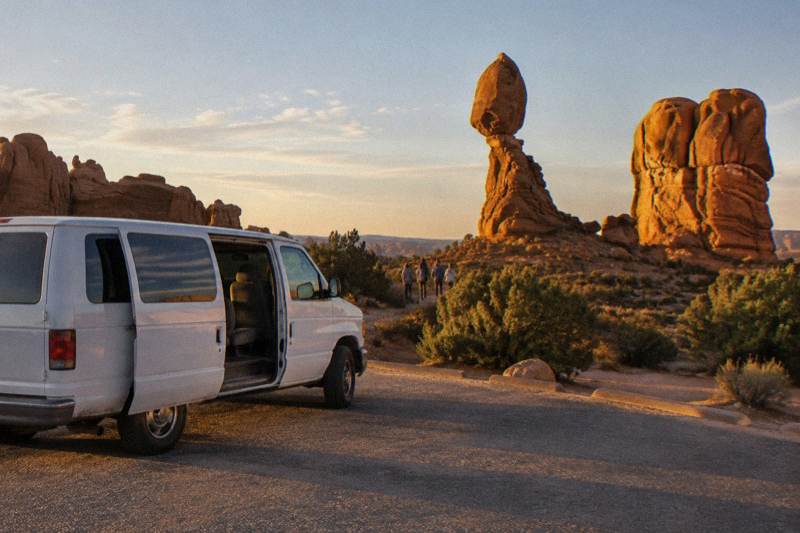
Which Is Better, Bryce Canyon Or Arches?
Bryce Canyon and Arches do different things well. This comparison breaks down scenery, crowds, hiking, tours and logistics to help Utah park-hoppers choose.
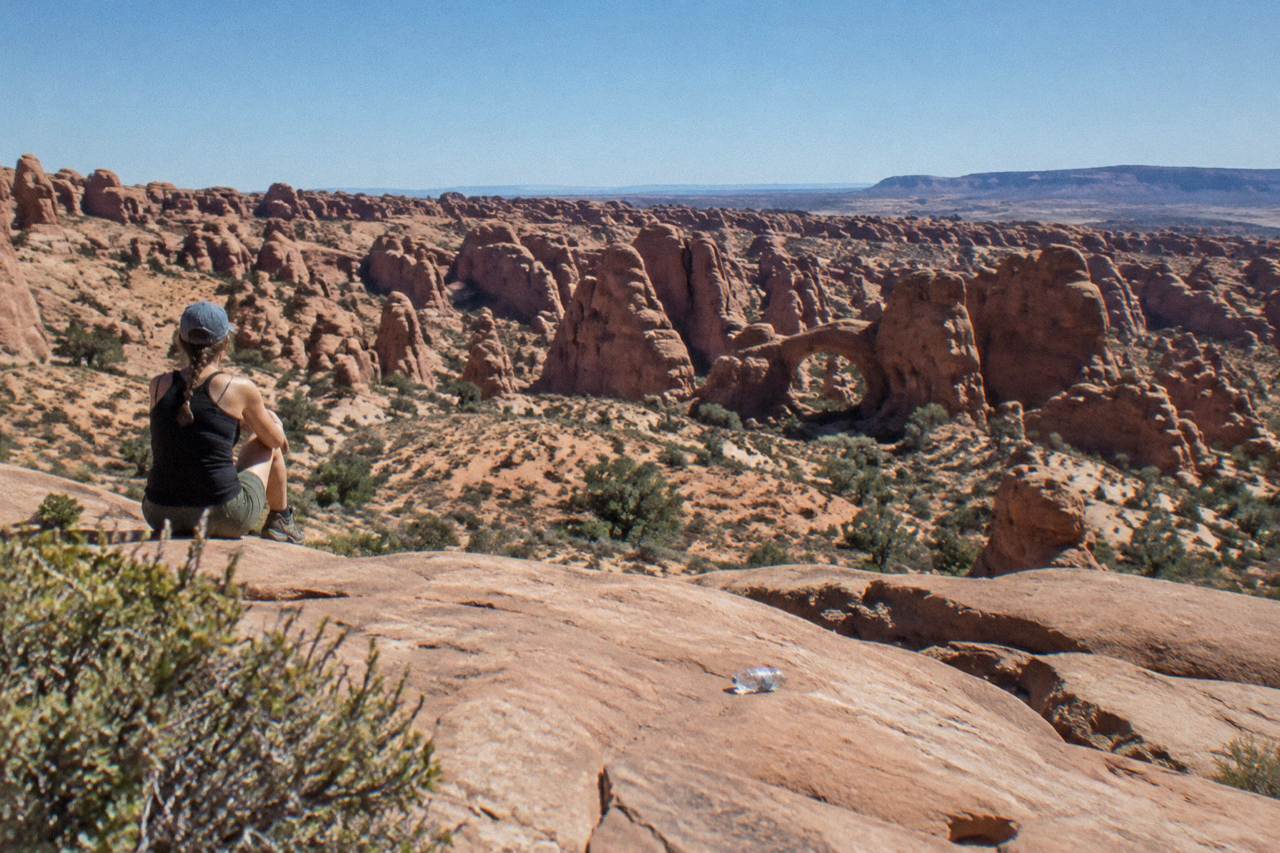
Which Park Should You Visit First?
Neither park is objectively better: Arches delivers over 2,000 documented stone openings in a compact, driveable desert landscape with about 1.5 million visits a year, while Bryce Canyon delivers tiered amphitheaters of hoodoos on a high plateau. Travelers who want arches, short walks and warm-season light choose Arches. Travelers who want rim overlooks and alpine-cool air choose Bryce. If your Utah trip has room for only one more park, our Zion versus Arches comparison weighs the landscape, crowds and trip length for those two.
The honest answer is that most Utah road trips include both, because the two parks sit on the same southern Utah corridor and reward different stops. The question that matters is which one gets your limited time, your best morning and your money. Arches is the denser experience: the National Park Service describes it as the densest concentration of natural stone arches in the world, packed into 76,519 acres with a single paved road threading the middle of it. Bryce Canyon spreads its famous hoodoo amphitheaters along a plateau rim, and its defining views come from overlooks rather than from within the landscape.
There is also a practical difference in season. Arches sits low, with the visitor center at 4,085 feet and summer days that often exceed 100 F per the NPS weather page. Bryce Canyon's plateau is well above that, which changes what each park feels like in July. This guide compares the two on scenery, hiking, crowds, timing and cost, and points to the guided options that suit each choice, including the Arches National Park Tours comparison on our homepage.
What Does Each Park Actually Look Like?
Arches is a maze of sandstone fins, domes and openings you walk and drive among, anchored by Delicate Arch, a 46-foot-high free-standing opening that stands as the park's icon. Bryce Canyon is a series of natural amphitheaters carved into a plateau edge, filled with thousands of hoodoo spires viewed mostly from above. One park puts you inside the rock. The other puts you on the rim looking down.
At Arches the signature experience is the arch itself: over 2,000 documented openings, Landscape Arch stretching 306 feet across its light opening as the longest in the park, and Double Arch South standing 112 feet as the tallest. The NPS quick facts page notes the range from 4,085 feet at the visitor center to 5,653 feet at Elephant Butte, a modest vertical range that keeps most of the park accessible on foot.
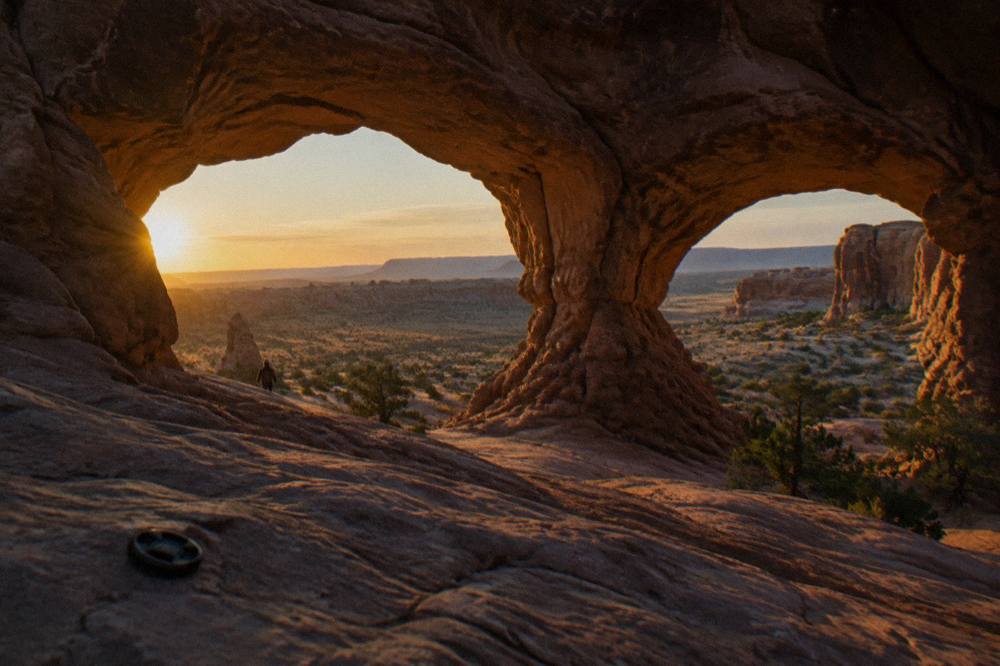
Bryce Canyon's hoodoos are its own phenomenon, and photographs honestly convey it better than words: columns of striped rock in stepped rows, best known from the rim viewpoints at sunrise when low light rakes across the formations. The parks share red rock and thin air, but the visual rhythm is entirely different. If your trip album wants variety, that argues for seeing both rather than doubling down on either.
Photographers lean both ways. Arches rewards foreground composition and night work; it is an International Dark Sky Park, with the certification year 2019. Bryce rewards rim panoramas and cool mornings. Neither park permits drones, so aerial framing means booking a permitted scenic flight, which at Moab means Redtail Air's airplane tours rather than anything over Bryce on this route.
How Far Is Arches National Park From Bryce Canyon?
The two parks are not day-trip companions: Bryce Canyon and Arches sit at opposite ends of southern Utah's park corridor, and the drive between them is a half-day commitment that most travelers break with a stop at Capitol Reef or a night in the middle. Do not plan to see both from one base. Plan a route, and give each park its own night or two. The same base-town question comes up on the western end of the corridor, and our guide to choosing between Zion and Moab as your home base helps you pick the town that fits your style of trip.
The routing decision is the real fork in a Utah trip. Arches is anchored to Moab, with the park entrance five miles north of town on US 191, per the NPS directions page, roughly ten minutes from town. Moab is 236 miles southeast of Salt Lake City and 110 miles southwest of Grand Junction, which makes it the natural eastern anchor of a loop.
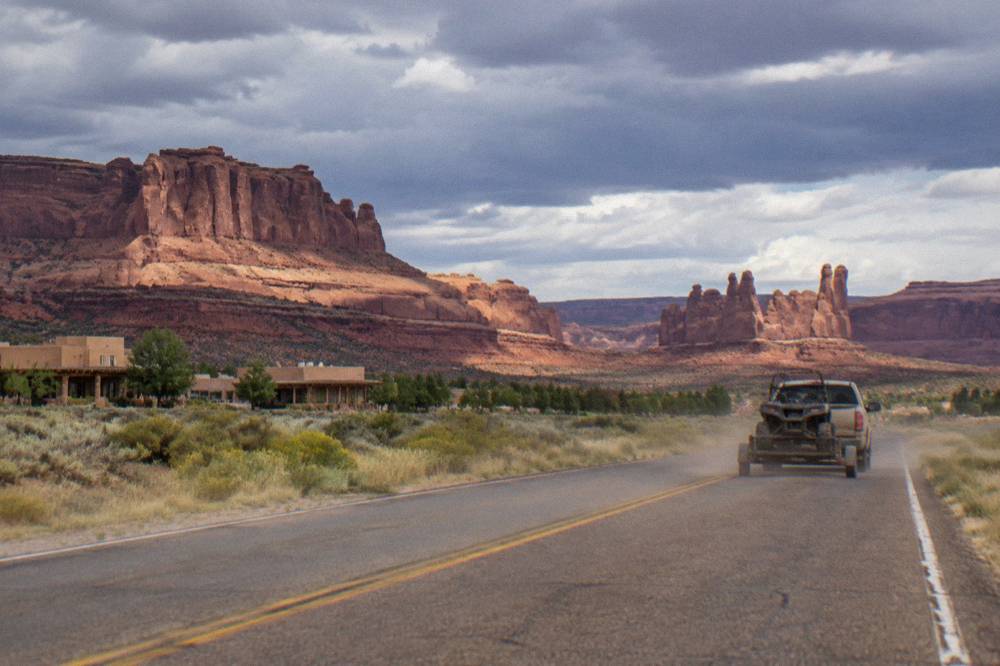
Because the drive is long, the practical comparison is not Bryce versus Arches but Bryce plus Arches in what order. Coming from Las Vegas or Zion, Bryce comes first and Arches sits at the far end. Coming from Denver or Grand Junction, Arches comes first. Check the mapping service of your choice for current drive times and road conditions before locking an itinerary; the exact mileage depends on the route, and the NPS conditions page is the source for any park road status at the Arches end.
Which Park Is Better For Hiking?
Arches offers short, dramatic walks on slickrock, with Delicate Arch as the marquee hike at 3 miles round trip climbing 480 feet, plus easy strolls to the Windows and Double Arch. Bryce Canyon's trails descend into the hoodoos, which means every step down is a step back up at elevation. Arches wins for approachable mileage. Bryce wins for the feeling of walking through the formations themselves.
The Delicate Arch numbers come straight from the NPS trail page: the trail passes the Wolfe Ranch cabin and a Ute petroglyph wall, and if the trailhead lot is full the walk from the viewpoint lot becomes 5 miles round trip. The lower viewpoint is a level 100-yard walk that shows the arch from about a mile away, a real option for travelers who cannot or do not want the climb. Our guide to Delicate Arch by tour or hike breaks that decision down stop by stop.
Heat is the Arches variable. Summer highs average 93 F in June, 100 F in July and 97 F in August per the NPS almanac, with 16 days above 100 F in an average July, and rangers respond to hundreds of search and rescue incidents a year, many heat-related. Bryce Canyon's higher elevation flips that problem: mornings can be cold even in summer. Either way, carrying water is not optional, and guided Arches tours bake logistics into the price: the Moab Adventure Center morning tour with guided hikes includes snacks, water and park entry from $148 per person, rated 4.9 across 78 reviews.
Which Park Is More Crowded And When Should You Go?
Arches is one of the most congestion-prone parks in the system: the NPS states that between March and October entrance waits may exceed 60 minutes, and when lots fill, staff can restrict access to specific locations for 3 to 5 hours. Bryce Canyon spreads visitors along a long rim road. For crowd avoidance, Bryce has the easier geometry, but Arches rewards early and late entries.
The NPS recommends entering Arches before 8 am or after 3 pm, and notes that in summer many trailhead lots fill by 7:30 am. There is no timed-entry reservation requirement in 2026, so arriving early is purely a parking strategy, not a booking problem. The full timing playbook, including what the free Moab-Arches shuttle covers, is in our piece on what time you should get to Arches.
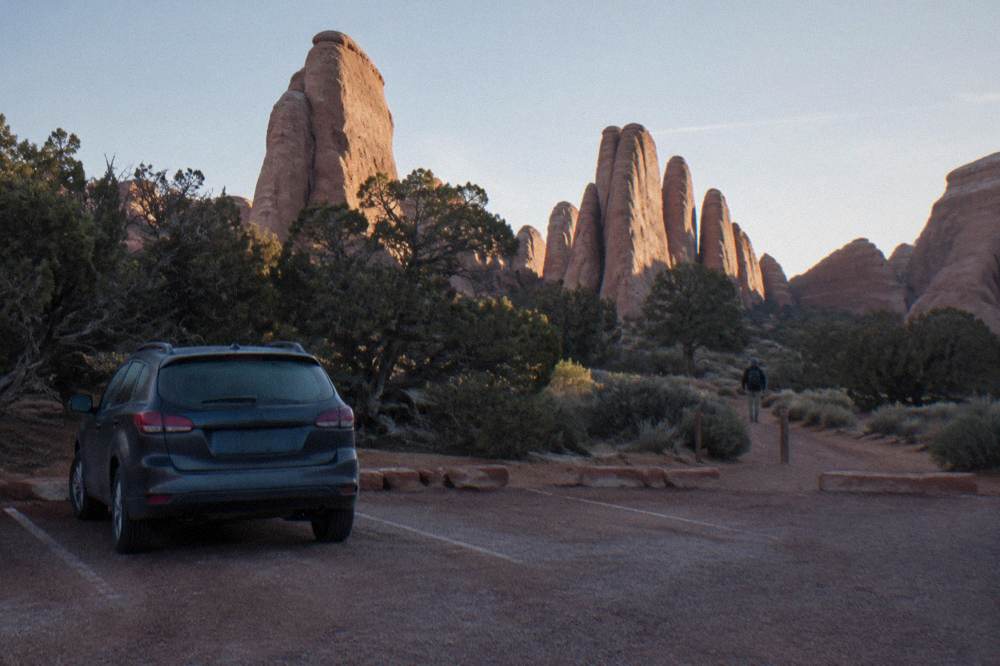
Season matters as much as clock time. Spring and fall bring Arches highs of 60 to 80 F with lows of 30 to 50 F, which most walkers find ideal; the NPS weather page describes the daily swings, sometimes more than 40 degrees, that make layers mandatory. Winter is quiet and cold, with highs of 30 to 50 F and the possibility that snow or ice makes trails impassable. Any month-by-month planning should start with our best time to visit Arches guide.
| Factor | Arches | Bryce Canyon |
|---|---|---|
| Defining feature | Over 2,000 documented stone arches | Hoodoo amphitheaters along a plateau rim |
| Landscape feel | Walk and drive among fins and arches | Overlooks above the formations |
| Signature hike | Delicate Arch, 3 miles round trip, 480 feet of climb | Descending trails into the hoodoos, climb back out |
| Summer heat | Highs often above 100 F | Cooler at elevation, cold mornings |
| Crowding | Entrance waits can exceed 60 minutes March to October | Spread along a longer rim corridor |
| Base town | Moab, 5 miles from the entrance | Towns along the plateau approach |
| Night sky | International Dark Sky Park | Also known for dark skies |
Which Park Suits A Tour Better?
Arches is the stronger guided-tour park, not because Bryce lacks guides but because Arches' single road, parking crunch and interpretive density make a guide genuinely useful. The Moab tours on this site span van sightseeing, guided hikes, backcountry 4x4 routes, photography days and scenic flights, from $15.99 per vehicle for audio to $425 per person for a photographer-led full day.
The most reviewed guided option at Arches is the NAVTEC backcountry 4x4 with dinosaur tracks, 4.8 across 2,059 reviews, from $240 per person, which reaches terrain most private vehicles never touch. Road-based touring is anchored by the Moab Tourism Center panoramic van, 5.0 across 879 reviews, from $159 per person with the entrance fee included, and the Mild to Wild half-day with park entry from $139 per person, 4.8 across 117 reviews, which adds a junior ranger program for kids under 12.
For park-hoppers squeezing multiple icons into one day, the Moab In A Day three-parks tour covers Arches, Canyonlands and Dead Horse Point in eight hours, 5.0 across 367 reviews, from $399 per person including Dead Horse Point entry and hotel pickup. It is the clearest answer to the Bryce-versus-Arches squeeze: if the schedule only allows one long guided day out of Moab, this is the one that buys back the most ground.
Budget travelers have a different lever. The Shaka Guide self-guided audio driving tour costs from $15.99 per vehicle with lifetime access for everyone in the car, rated 4.5 across 41 reviews, and the audio-only comparison against guided touring is laid out in our audio guide versus guided tour guide. Bryce Canyon works fine as a self-guided rim stop; Arches is where the guided dollars arguably buy more.
What Does Each Park Cost To Visit?
Arches charges $30 per private vehicle, $25 per motorcycle or $15 per person on foot or bicycle, with the pass covering everyone in the vehicle, and three Moab tours fold that entrance fee into the ticket price. Bryce Canyon's fee structure is a separate schedule, so the honest cost comparison is entrance fee plus tour spend, and the tour side is where Arches offers far more choices.
The Arches fee schedule, per the NPS fees page, includes an Arches and Canyonlands annual pass at $55 for US citizens and residents, and accepts America the Beautiful passes, with the Resident Annual at $80 and the Senior Lifetime at $80. Youth 15 and under enter free. The 2026 fee-free days run February 16, May 25, June 14, July 3 to 5, August 25, September 17, October 27 and November 11 for US citizens and residents.
| Arches cost item | Amount | Notes |
|---|---|---|
| Private vehicle | $30 | Covers all occupants, 15 passengers or fewer |
| Motorcycle | $25 | Valid up to two motorcycles, four passengers |
| On foot or bicycle | $15 per person | Youth 15 and under free |
| Arches and Canyonlands annual pass | $55 | US citizens and residents |
| America the Beautiful Resident Annual | $80 | Covers one vehicle fee or four per-person fees |
| Fiery Furnace ranger-led hike | $16 per person | Reservations required, spring through fall |
| Fiery Furnace self-guided permit | $10 per person | Reserve 2 to 7 days ahead, groups of 6 or fewer |
Guided tour pricing is where planning ranges matter. Half-day guided Arches tours run from $139 to $240 per person across the tours listed here, full-day combinations reach $337 to $399, scenic flights run $255 to $480, and audio tours cost $15.99 to $24.99 per vehicle. The booking page for each listing shows the live price. Note the Fiery Furnace wrinkle: no commercial tour enters it, because the NPS states that commercial groups are not permitted on the self-guided permit, so no guided Arches tour substitutes for one.
Which Park Should A First-Time Utah Visitor Pick?
First-timers with limited days should pick Arches if they want guaranteed icons close to the car, a walkable marquee hike and a lively base town, because Moab condenses lodging, food and tour operators within ten minutes of the entrance. Pick Bryce Canyon if the priority is the single most photographed overlook sunrise in the state and cooler summer walking. Two days each is the sweet spot if the schedule allows.
The Moab base is the quiet advantage. Beyond Arches, the town anchors Canyonlands, Dead Horse Point and the Colorado River corridor, and our things to do in Moab beyond Arches guide covers the alternatives. Redtail Air's scenic flights from Canyonlands Field put both parks overhead in 30 to 80 minutes, from $255 per person for the Arches flight, rated 5.0 across 44 reviews, which is a genuinely different way to settle the Bryce-or-Arches argument for travelers who only have half a day.
For the classic one-decision traveler, here is the shorthand. Families with young kids lean Arches, where the Mild to Wild half-day includes a junior ranger program. Photographers split: arch-and-night-sky shooters pick Arches, sunrise-rim shooters pick Bryce. Visitors who dislike driving switchbacks pick Arches. Visitors who measure trips in overlooks pick Bryce.
Which Park Wins If You Can Only Visit One In 2026?
For a single-park visit, Arches is the pick for most travelers: the density of sights per mile, the absence of a timed-entry reservation and the Moab tour infrastructure together make it the easier park to execute well. The Moab-Arches shuttle ran as a 2026 pilot, free with a valid park pass, and 2027 service has not been announced. Bryce Canyon remains the better single visit for rim-sunrise photographers and heat-averse summer hikers.
The 2026 logistics tilt matters. Arches dropped its timed-entry reservation requirement for the year, and the shuttle connects downtown Moab to the visitor center, the Windows area and the Delicate Arch trailhead seven days a week, 8 a.m. to 5 p.m., free with a valid park pass, with the last Delicate Arch departure at 4:05 p.m. Nothing equivalent is needed at Bryce, but nothing equivalent is offered either: the Arches visit has simply gotten easier to pull off without a plan.
The decisive factor for most itineraries is what a tour adds. Bryce Canyon is largely a self-guided experience of overlooks and descents. Arches rewards interpretation: geology, parking strategy, light timing and backcountry access all improve with a guide, and the tours on this site prove it, from the Moab In A Day sunset tour with optional stargazing, 5.0 across 118 reviews from $189 per person, to the photography day from $425 per person. Our which tour to book guide sorts the whole field by budget and style.
Common Questions About Bryce Canyon Or Arches
Which Is Better, Bryce Canyon Or Arches?
Neither is universally better. Arches offers the densest concentration of stone arches in the world, easier logistics from Moab and a deeper selection of guided tours. Bryce Canyon offers hoodoo amphitheaters, cooler summer temperatures and rim-overlook sunrise views. Most southern Utah road trips include both, spaced a half day of driving apart.
How Far Is Arches National Park From Bryce Canyon
The two parks anchor opposite ends of southern Utah's park corridor, and the drive between them is a half-day commitment that depends on the route chosen, so check a mapping service for current mileage and conditions before planning. Most travelers break the drive with a night mid-route or a stop at Capitol Reef. Do not plan to day-trip one park from a base at the other.
Can You See Arches And Bryce Canyon On The Same Trip?
Yes, and that is the recommended way. A typical loop gives each park one to two nights, with Arches based in Moab and Bryce Canyon based near its plateau approach. The Moab In A Day three-parks tour, from $399 per person, can compress Arches, Canyonlands and Dead Horse Point into a single day to free schedule for the drive west.
Do Tours At Arches Include The Entrance Fee?
Only three tours on this site include the park entrance fee in the ticket: the Moab Tourism Center panoramic van tour, the Mild to Wild half-day tour and the Moab Adventure Center morning tour with guided hikes. On every other tour, bring an America the Beautiful pass or expect to pay the separate NPS fee, which is $30 per private vehicle.
Which Park Is Better In Summer Heat?
Bryce Canyon, on elevation. Arches averages July highs of 100 F with 16 days above 100 F in a typical July, per the NPS almanac, and rangers respond to hundreds of search and rescue incidents a year. If visiting Arches in summer, enter before 8 am or after 3 pm, carry water and consider a guided tour that handles timing and supplies.